Quick Answer
AGM (Annual General Meeting) motions can significantly impact a buyer—especially in BC’s busy spring market, where votes on major expenses, bylaw changes, or special levies are often scheduled. Before writing an offer, check the most recent AGM notice and agenda for upcoming decisions that could affect your costs, rights, or use of the property.
Why do AGMs and buying season overlap in BC?
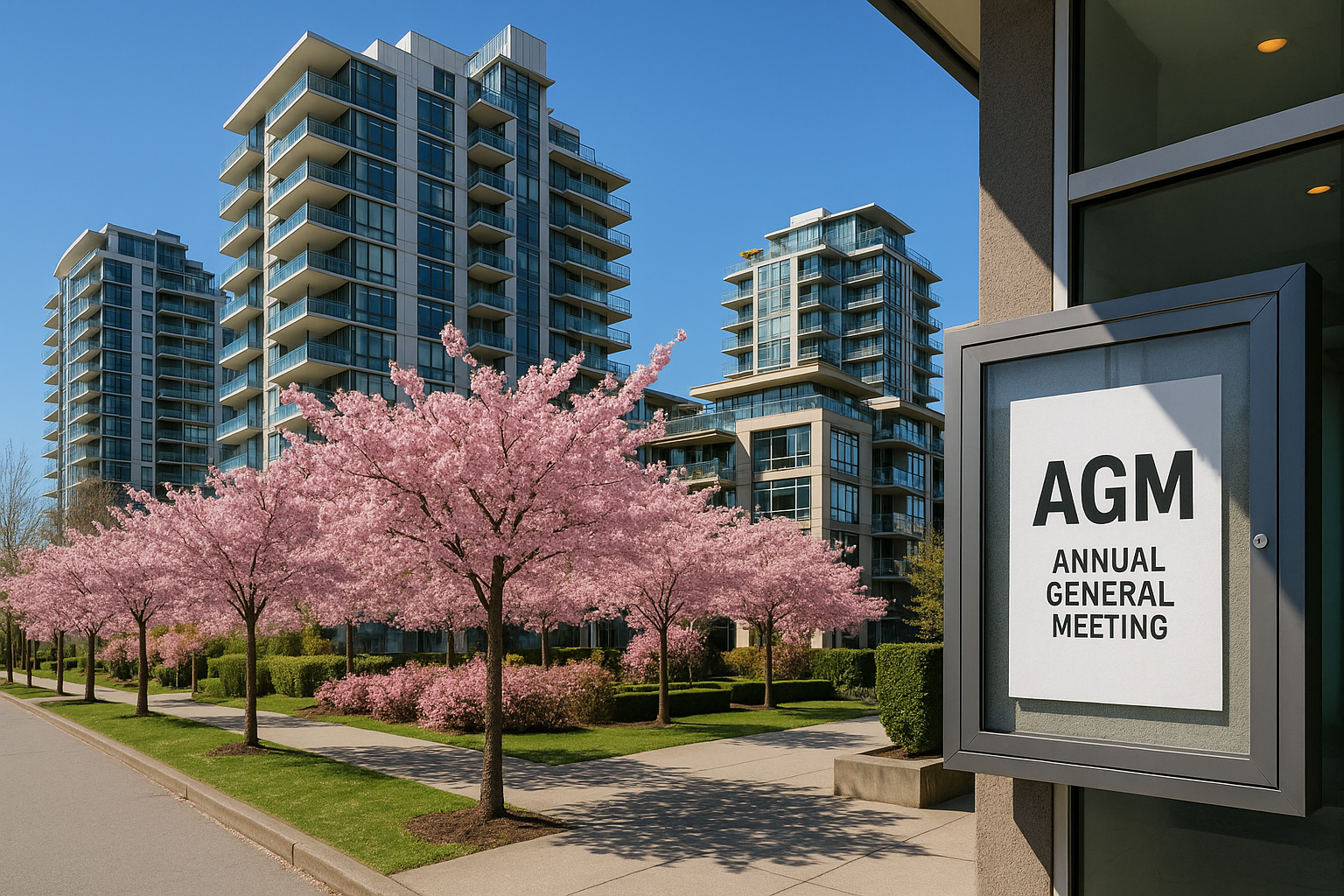
Most BC stratas hold their AGMs in spring because the Strata Property Act requires one within six months of fiscal year-end, and many buildings set their year-end at December 31. This means AGM season overlaps with peak home buying—especially in Vancouver and the Lower Mainland. Buyers often see “pending AGM” flagged in listings or Form Bs this time of year.
What types of AGM motions matter most to buyers?
AGM motions can decide on spending, bylaws, and management changes—each with unique impacts for buyers. Key motions to watch for include:
- Special levies or major repairs (e.g., roof, elevators)
- Changes to strata bylaws (e.g., rentals, pets, smoking)
- Budget approvals (affects monthly strata fees)
- Contingency reserve contributions (impacting future special levies)
Pay extra attention if the meeting involves a large repair vote or a bylaw change that might limit your intended use.
How can buyers access upcoming AGM motions and agendas?
You can usually find the AGM notice and agenda in the latest strata document package (Section 35 records) or attached to a recent Form B. Sellers or their agents must provide these, and Vancouver-area agents are used to including them in spring. Look for a list of proposed resolutions, explanatory notes, and any reports (e.g., engineers) linked to the meeting.
What risks do pending AGM motions pose for buyers?
Pending motions can lead to sudden changes in strata fees, new restrictions, or major one-time costs. If you buy before an AGM where a special levy is approved, you could become responsible for large assessments after closing. Uncertainty around bylaw changes or budget increases can also complicate your planning, especially for investors or first-time buyers.
What should buyers do if there’s an upcoming AGM?
If an AGM is scheduled soon, review the agenda with your agent or a strata-savvy professional. Ask:
- Will any special levies or large expenditures be decided?
- Are there major bylaw changes proposed?
- Who will be responsible for new costs based on completion dates?
- How might the budget affect future strata fees?
You may want to delay closing, renegotiate, or request a holdback if major decisions are imminent.
Frequently Asked Questions
Are buyers responsible for special levies approved after subject removal?
Buyers are generally responsible for special levies approved after the completion date, not merely after subject removal or offer acceptance. Check your contract and seek legal advice if unsure.
Can I attend the AGM before I own the unit?
Only owners and eligible proxies can attend and vote at a strata AGM. Buyers who have not yet completed the purchase do not have voting rights, but the seller can sometimes provide information or attend on your behalf.
What if I disagree with an AGM motion after buying?
Once you become the registered owner, you are bound by the decisions made by the strata, including those passed at recent or upcoming AGMs. Reviewing motions before purchasing is crucial to avoid surprises.
Is the AGM agenda included in the Form B?
The Form B itself may summarize pending issues, but the full AGM notice and agenda are typically included in the document package or can be requested from the seller or strata manager.
Conclusion
AGM season lines up with BC’s busy spring real estate market, making it crucial for buyers to check upcoming motions for surprises like special levies or bylaw changes. Reviewing AGM documents lets you spot risks, ask the right questions, and avoid costly surprises after you move in. SearchStrata can help you identify important details so you can buy with confidence this spring.