Quick Answer
Strata council correspondence in BC often surfaces issues not formally recorded in minutes, including owner complaints, bylaw enforcement, or unresolved disputes. Buyers and realtors should review this correspondence for signs of conflict, looming expenses, and patterns that might affect ownership experience or resale value.
What is strata council correspondence and why does it matter for buyers?
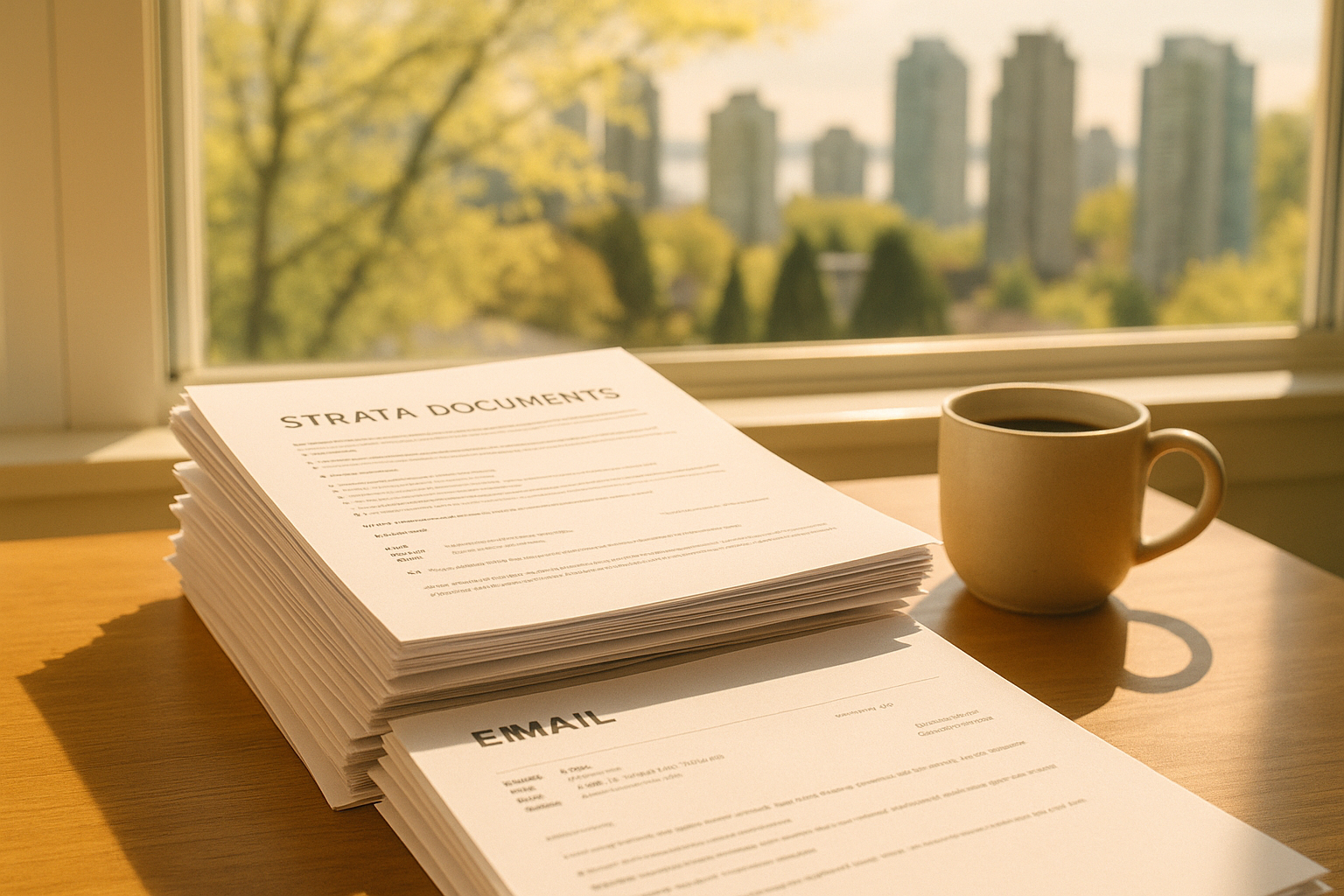
Strata council correspondence includes emails, letters, and other written communication between council, owners, and property managers. It often reveals day-to-day issues and concerns not captured in official meeting minutes. For buyers, these documents can highlight chronic building problems, recurring disputes, or compliance issues. In cities like Vancouver or Surrey, council correspondence sometimes hints at coming special levies or costly repairs before they're formally announced.
What red flags should buyers watch for in strata council emails?
Buyers should watch for repeated unresolved complaints, aggressive or legal threats, and frequent bylaw enforcement actions in strata council emails. These patterns can suggest deeper problems within the building. Look for:
- Ongoing water leaks or envelope issues
- Smoking, noise, or pet disputes that escalate
- Owner threats of litigation
- Regular mentions of bylaw violations Frequent reference to outside consultants or lawyers may also signal complex or costly disputes brewing.
Can correspondence reveal financial or special levy risks before they’re official?
Yes, council correspondence sometimes discusses planned repairs or potential levies before formal votes or announcements. Early warning signs include talk of contractor quotes, engineering reports, or references to upcoming owner meetings for major projects. Even if financial statements or Form B don’t mention a levy yet, correspondence may show the council bracing for new expenses—crucial context for buyers deciding on an offer.
How can buyers legally access strata council correspondence in BC?
Section 36 of the Strata Property Act gives owners, tenants who have been assigned the landlord's inspection right, anyone an owner or tenant authorizes in writing, and former owners and tenants the right to request correspondence records. Strata corporations must provide all written correspondence related to council business, except personal/unit-specific info. In practice, buyers typically request emails and letters for the past 2 years alongside the standard strata document package. It’s especially important in the spring when activity—and potential issues—peak.
How should buyers interpret tone and frequency of correspondence?
A high volume of heated or defensive emails can indicate a dysfunctional council or divided community. While occasional disputes are normal, constant personal attacks or frustration point to a stressful environment for future owners. Conversely, brief and respectful exchanges—even on difficult topics—suggest a well-run council. Pay attention to patterns rather than isolated incidents when reviewing correspondence from buildings in places like Burnaby or Victoria.
Frequently Asked Questions
What is considered strata council correspondence in BC?
Strata council correspondence includes all written communication between the council, owners, or managers relating to strata business, such as emails and letters about building issues or bylaw enforcement.
Are buyers allowed to see strata council emails before buying?
No, the right to inspect and copy the Section 35 records belongs to owners, tenants who have been assigned that right, former owners and tenants, and anyone authorized in writing by one of them — not to buyers as such — and the Act sets out no exception for private matters about individual units or personnel matters.
How far back should buyers review strata council correspondence?
Most buyers request 1–2 years of council correspondence to spot ongoing issues or emerging problems before making a decision.
Can strata council correspondence predict upcoming special levies?
Council emails often discuss major repairs or projects before they appear in official minutes or Form B, giving buyers early insight into future special levies or assessments.
Is negative council correspondence always a dealbreaker for buyers?
Not always—some conflict is normal, but patterns of hostility, unresolved complaints, or frequent legal threats may signal a troubled building that warrants caution.
Conclusion
Strata council correspondence can provide early warning of building problems, governance issues, or upcoming expenses that aren’t obvious from minutes or financials. For BC condo buyers and their agents, reviewing these emails and letters—especially during the spring rush—can make the difference between a confident purchase and an expensive surprise. SearchStrata can help you quickly surface these red flags so you can focus on the homes that truly fit your needs.