Quick Answer
Before writing an offer on a BC strata property, buyers and their agents should carefully review strata minutes, financials, the Form B, depreciation reports, bylaws, and any records of litigation or special levies. This due diligence helps you spot red flags—like upcoming expenses, legal disputes, or bylaw restrictions—so you can make an informed, defensible decision. Always verify the most recent documents and, if unsure, consult a knowledgeable professional or an analysis tool like SearchStrata.
Why Pre-Offer Strata Document Review Matters
Reviewing strata documents before writing an offer lets you uncover issues that could affect your enjoyment, financial risk, or even your ability to rent or renovate. Acting early helps you avoid common surprises that can surface after your offer is accepted.
In active markets like Vancouver and Surrey, listings move quickly, but making an informed offer means more than just reading the MLS description. Skipping a thorough review can mean missing costly details in minutes or bylaws. Using tools to analyze packages efficiently is crucial, especially when time is tight.
Being proactive can also strengthen your offer by letting you waive unnecessary conditions—or, if issues arise, help you step back before risking your deposit or peace of mind.
Which Strata Documents Should You Request Before an Offer?
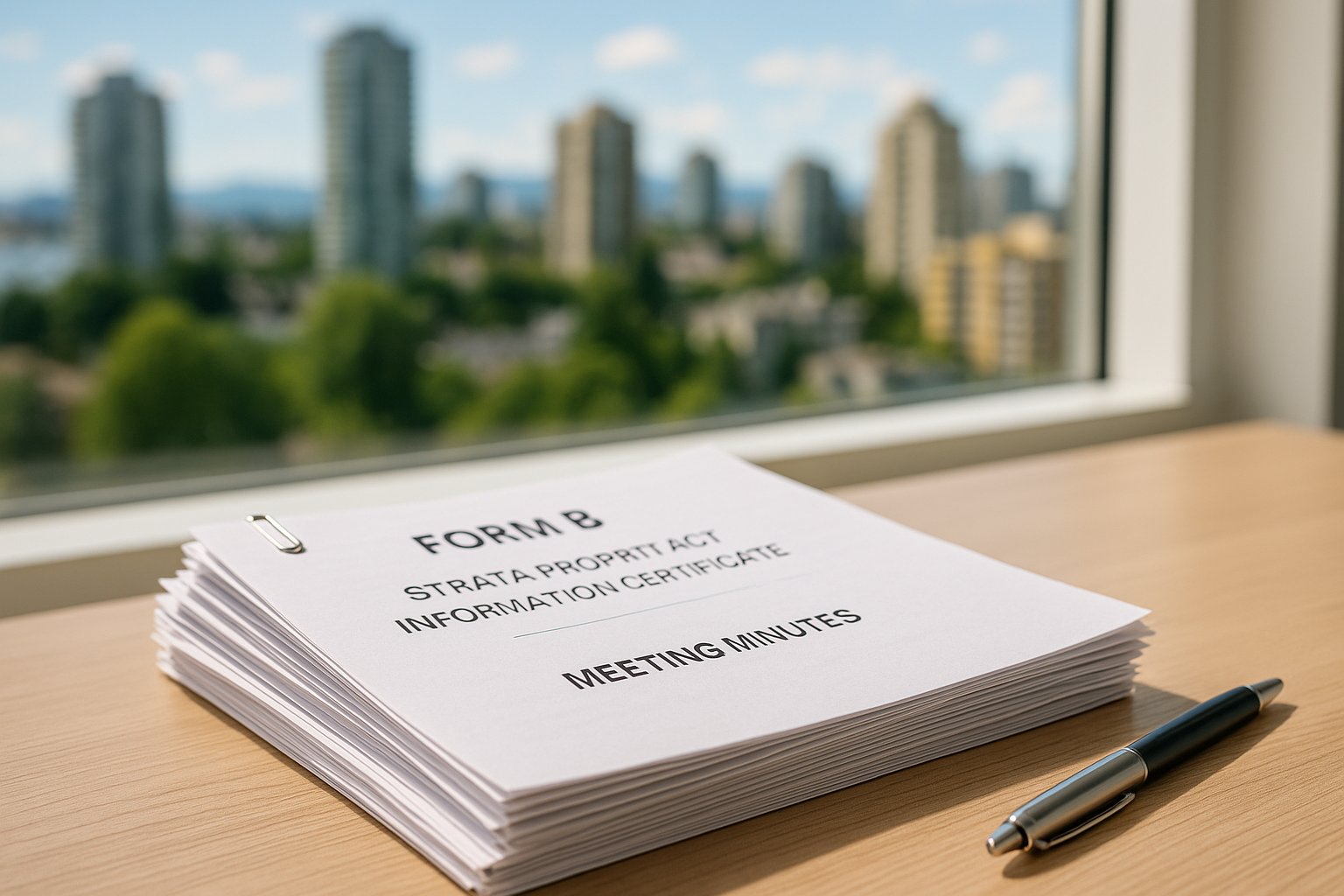
The essential strata documents to review include the latest Form B, at least two years of council and general meeting minutes, recent financial statements, the current budget, the depreciation report, registered bylaws, and insurance certificates. These pieces give you a holistic view of the building's financial health and community rules.
If available, request copies of:
- The strata’s latest meeting minutes (AGM, SGM, council)
- The most recent Form B (to verify parking, storage, fees, outstanding levies)
- The current year’s budget and latest financials
- The depreciation report (mandatory for most BC stratas; confirm current regulations)
- All registered bylaws and any amendments
- Insurance summary and certificates
If litigation, warranty claims, or insurance issues are mentioned, ask for supporting correspondence or legal letters.
What Red Flags Should You Watch For in Strata Minutes and Financials?
Hidden risks often show up in the fine details—like repeated mentions of water leaks, “upcoming work,” or committee debates about funding. Early signs of special levies or insurance price hikes can appear in minutes long before you see the invoice.
When reviewing financials and minutes, pay special attention to:
- Recurring maintenance or repair issues (roof, plumbing, elevator)
- Notes about special levy votes, approvals, or discussions
- Drops in the contingency reserve fund (CRF) balance, or frequent CRF spending
- Deferrals of essential building work
- Pending lawsuits, claims, or insurance deductible increases
If your review flags these issues, it may not be a dealbreaker—but you’ll want to budget for potential costs and consult an expert. For a deep dive on this, see How to Spot Litigation and Insurance Red Flags in BC Strata Documents Before You Offer.
How Do Bylaws and Restrictions Affect Your Decision?
Strata bylaws directly affect your ability to rent out, renovate, or even live with pets in your new home. Bylaws can vary widely between buildings and often change over time.
Look for bylaws that impact:
- Rental and short-term accommodation restrictions
- Pet policies (number, breed, or size limits)
- Renovation rules and approval processes
- Move-in/move-out fees or policies
- Smoking, age, or noise restrictions
It’s common to see bylaws revised annually or after owner meetings, so always ensure you have the most current versions. Double-check restrictions with your Realtor and ask council for clarification if needed, especially in buildings in Burnaby or Richmond, where rules can shift rapidly.
Making the Most of the Subject-Removal Window
The subject-removal period is your last chance to review documents, line up insurance, or have a professional analysis done before your deposit is at risk. It acts as a safety net but is no substitute for quality pre-offer review.
If you find concerning information after your offer is accepted, you may be able to withdraw based on subjects—provided your contract is properly drafted. However, time is tight and sellers may prefer offers with fewer subjects. That’s why it pays to do as much document review as possible up front, or to use services like SearchStrata for an extra layer of analysis.
Coordinate with your Realtor to clarify subject wording and ensure your due diligence aligns with your risk comfort, especially as markets across Victoria and Coquitlam heat up.
Frequently Asked Questions
What is a Form B and why is it important for BC buyers?
A Form B is a standardized document provided by the strata that summarizes key details like monthly fees, parking and storage allocation, approved special levies, and any bylaw amendments not yet filed at the land title office, with the strata's rules, current budget and most recent depreciation report attached. Buyers use it to verify essential information before making an offer.
How far back should I review strata minutes before writing an offer?
It's generally recommended to review at least two years of strata meeting minutes to spot patterns of maintenance, bylaw changes, or emerging problems. Always confirm you have the latest available records.
What financial warning signs should I look for in a strata's documents?
Red flags include a low contingency reserve fund, frequent special levies, major repairs planned but not funded, and significant insurance premium hikes. Always verify figures against the official documents and consult a professional if unsure.
Can I review strata documents after my offer is accepted?
Yes, most BC offers include subjects that allow for post-acceptance review, but pre-offer review is safer. Relying solely on the subject removal window can be risky in fast-moving markets.
Are all depreciation reports in BC current and reliable?
Not always. While most stratas are required to maintain current depreciation reports, regulations and reporting cycles may change. Buyers should always confirm the report's date and validity with the strata or a qualified advisor.
Conclusion
A careful review of strata documents before writing your offer is one of the most important steps in buying a BC condo or townhouse. It protects you from nasty surprises—be they financial, legal, or lifestyle-related—and positions you to write a stronger, more confident offer. Using a tool like SearchStrata can help you quickly analyze packages and flag risks you might otherwise miss. If you're facing a tight decision window, consider getting started with SearchStrata to streamline your review.