Quick Answer
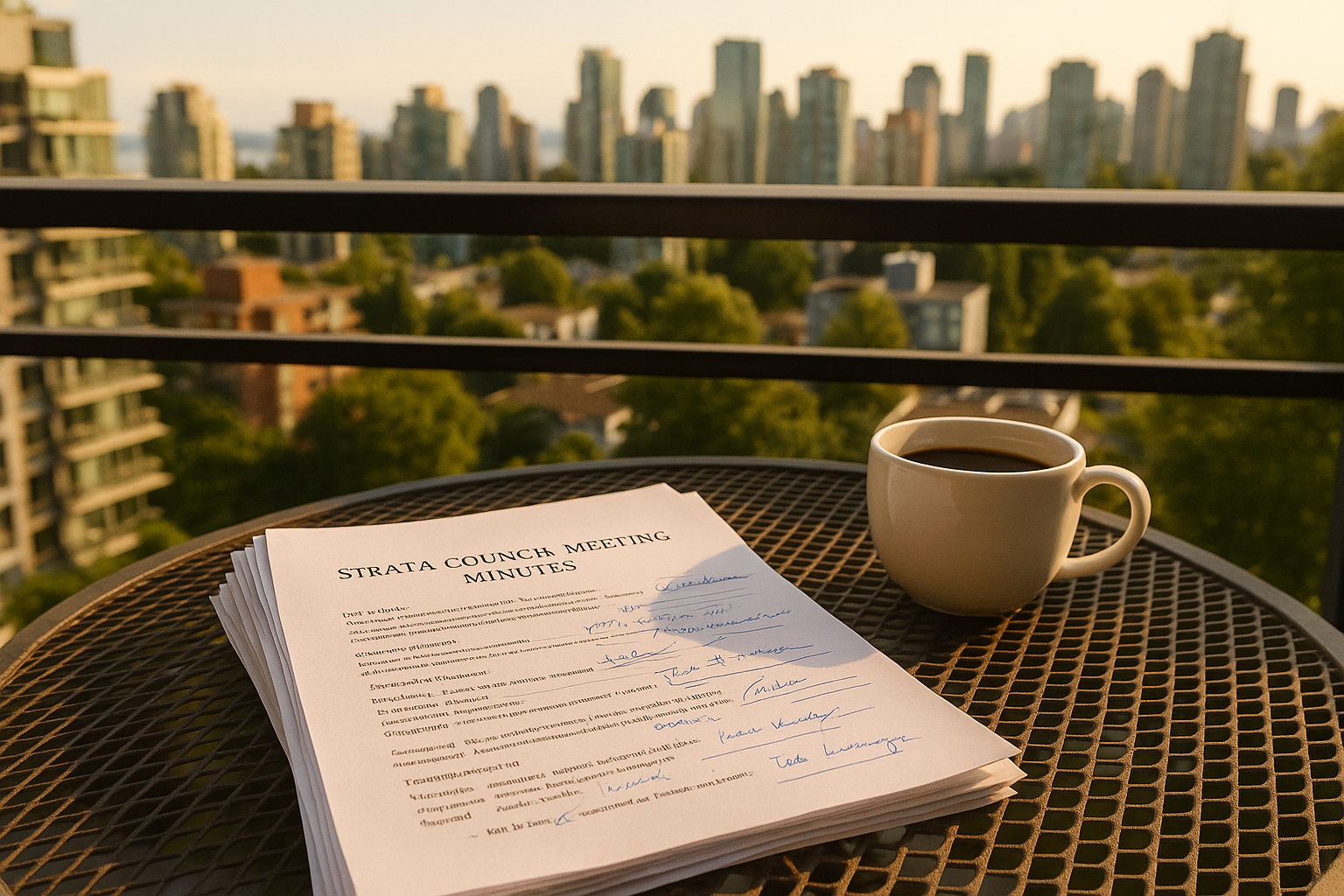
Strata council meeting minutes are the official record of decisions, discussions, and actions taken by your building’s elected council. To read them effectively, focus on recurring issues, pending repairs, bylaw enforcement, financial updates, and any plans that might affect your strata fees or daily living. Scrutinizing minutes helps owners anticipate changes and stay engaged with your community.
What are strata council meeting minutes, and why do they matter?
Strata council minutes document the formal business conducted by your elected strata council. These records are important because they provide transparency and help all owners track decisions, expenditures, and outstanding issues.
Minutes typically include: meeting dates, attendees, business discussed, council decisions, owner correspondence, and action items. Reviewing these lets you stay aware of planned projects, financial management, and bylaw changes that affect your unit or lifestyle.
For owners in Vancouver, Burnaby, or elsewhere in BC, minutes are a primary window into the building’s health and governance. They can also serve as evidence in the event of miscommunication or disputes.
How do you spot issues that might affect your fees or repairs?
You can spot upcoming changes or expenses by watching for patterns and recurring agenda items. Look for repeated mentions of repairs, insurance, or shortfalls—these often hint that a bigger project or increase in strata fees may be coming.
Common warning signs include:
- Deferred maintenance or postponed repairs
- Ongoing discussions about aging systems (elevators, roofs, plumbing)
- References to special levy planning
- Notices of cost overruns or unexpected expenses
If you see the same concern appear over several meetings, consider raising questions with council or at your AGM. Reviewing minutes alongside the annual budget or contingency reserve fund report helps you understand the financial context.
What do minutes say about bylaw enforcement and community issues?
Council minutes usually summarize how bylaw infractions, noise complaints, or community concerns are addressed. This helps owners gauge how rules are enforced and whether council is proactive.
Typical topics include:
- Pet, noise, or parking complaints and council responses
- Short-term rental enforcement updates
- Security or safety measures
- New rules or changes to bylaws for owner vote
If you notice frequent complaints going unresolved, or if enforcement appears lax, this could point to wider governance or livability issues.
How can owners use minutes to ask questions or raise concerns?
Minutes are a starting point for meaningful owner engagement. If you see an unclear decision or an unresolved issue, you can write to council or ask questions at upcoming meetings.
Some tips:
- Note which items are listed as "tabled" or "pending"
- Use minutes to follow up on timelines for repairs or bylaw changes
- Coordinate with neighbours if an issue affects multiple owners
BC's strata laws allow owners to request further records if details are missing—see What Strata Owners Should Know About Requesting Section 35 Records in BC for practical steps.
How far back should you read—and how do you access the minutes?
Owners are entitled to receive recent council minutes, which the council must circulate within two weeks of the meeting, whether or not they have been approved yet. For bigger-picture context, review at least the past year’s minutes—or more if you want to spot trends.
You can request minutes from your strata manager or council, and many strata corporations post them on a secure website or distribute by email. Under BC law, verify current record access rules and your strata’s process for obtaining older minutes or related records.
If you want a faster way to analyze and summarize minutes, consider using SearchStrata to extract patterns and issues from your documentation set.
Frequently Asked Questions
Can strata owners request older council meeting minutes?
Yes, BC strata owners can request council meeting minutes from previous years, but the process and timeframe may vary. Check with your strata manager or council for current procedures.
What should I do if something in the minutes seems inaccurate?
If you spot an error or omission, bring it to the attention of the strata council or manager as soon as possible so it can be corrected or clarified at the next meeting.
Are council minutes required to include owner correspondence details?
Minutes typically summarize owner correspondence and council responses, but may not include full details due to privacy laws. Owners can request further records when needed.
How soon after a meeting are strata council minutes available?
Strata council minutes must go out to owners within 2 weeks of the meeting, whether or not they have been approved yet, so you shouldn't be waiting weeks for them. You can request draft minutes if urgent.
Do minutes show every discussion or just decisions?
Minutes are a summary, not a transcript. They record decisions and key points, but not every conversation or informal remark.
Conclusion
Reading your strata council meeting minutes with a critical eye helps you stay informed, anticipate changes, and participate confidently in your building’s governance. Watch for patterns, unresolved issues, and follow up with your council when something matters to your household. For owners who want to save time digging through months of minutes, services like SearchStrata can help summarize and highlight what matters most.