Quick Answer
To read your BC strata's financial statements, review both the operating and contingency reserve fund (CRF) statements for income, expenses, and balances. Focus on expense overruns, CRF health, and any notes about upcoming repairs or risks. Owners should use these documents to spot trends, ask questions at meetings, and better understand their building's financial health.
What documents make up your strata’s financial statements?
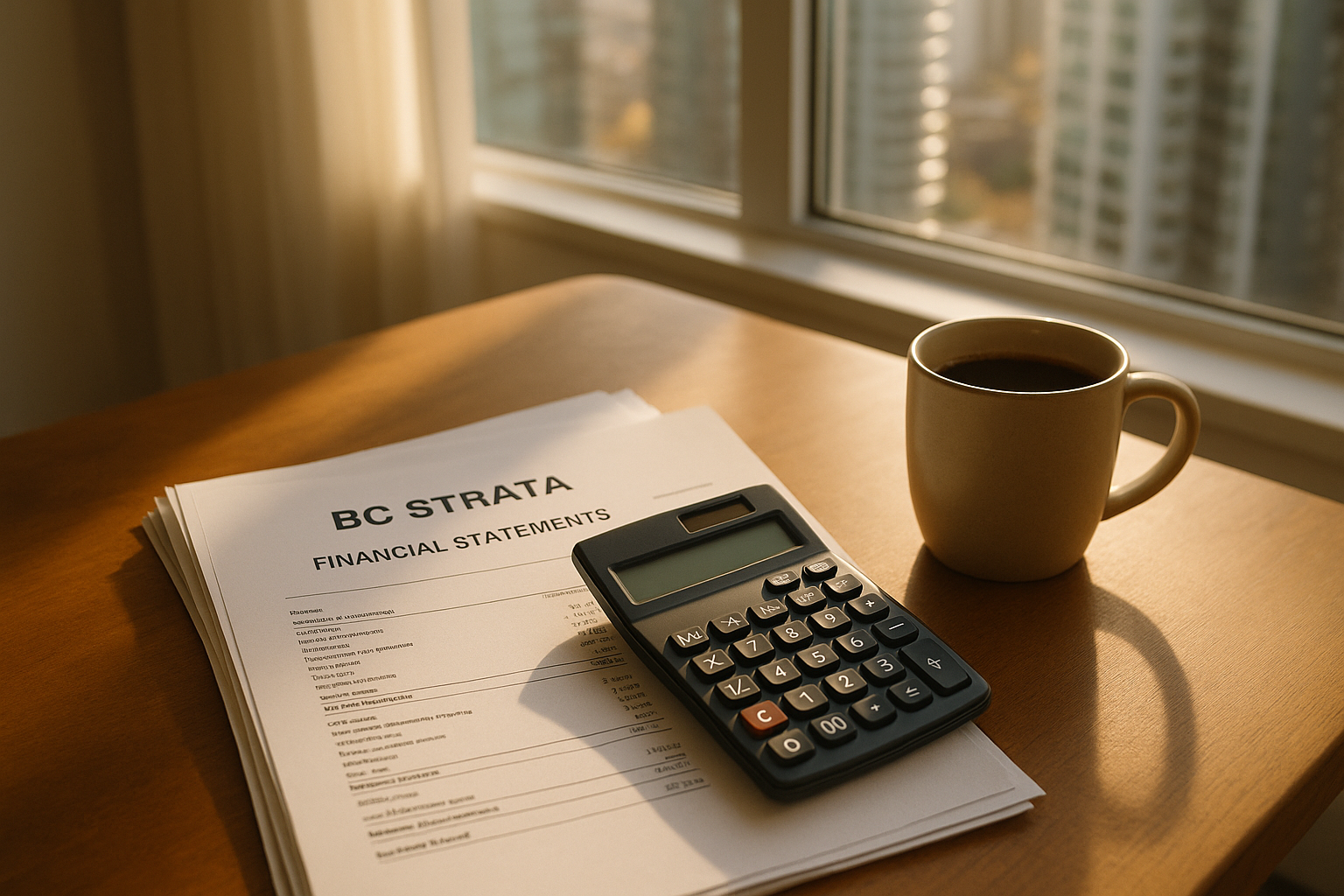
BC strata financial statements usually include an income statement, balance sheet, and detailed schedules for both the operating fund and contingency reserve fund (CRF). The income statement summarizes money coming in (mainly strata fees) and money going out (expenses). The balance sheet shows the assets and liabilities at the report date, including the funds' balances. Detailed schedules break down expenses—think cleaning, landscaping, repairs, utilities—while the CRF schedule shows savings and withdrawals for capital projects and emergencies. Expect to see these statements in your AGM package and, in many cases, as part of regular council updates.
What should owners look for in the operating fund?
Owners should pay close attention to whether operating expenses are on budget and whether the fund is running a surplus or deficit. The operating fund covers day-to-day costs (janitorial, insurance, utilities), and overruns here often lead to increased strata fees. Compare budgeted versus actual expenses line-by-line—are repairs, landscaping, or insurance running higher than expected? Significant deficits should be explained in meeting minutes or notes. If your strata is in Vancouver, Surrey, or other BC cities, sudden jumps in utilities or insurance are not uncommon.
How do you assess the health of your strata’s contingency reserve fund (CRF)?
To assess CRF health, check the ending balance and recent transactions, then compare these to upcoming needs described in the depreciation report. The CRF is your building’s savings account for major repairs—roof, elevators, windows. A low balance may signal risk of special levies if big repairs are due. Review any recent withdrawals: were they for planned projects or emergencies? Strong CRFs are especially important in older buildings in markets like Burnaby and Victoria, where aging infrastructure demands more investment. Cross-checking your financial statements with the depreciation report helps anticipate future funding needs.
Why do notes and schedules matter when reading the statements?
Notes and schedules provide essential context about financial results and unusual transactions. Look for explanatory notes about variances, loans, or insurance claims—they clarify why expenses ran over budget or why certain repairs happened. Schedules break down spending categories (e.g., legal, repairs, admin), making it easier to see where money is going. If your strata recently faced a major repair, the notes should mention if the cost was covered by insurance, the CRF, or a special levy. These details help owners understand the story behind the numbers.
When should you ask questions or dig deeper?
Owners should ask questions whenever they notice unexplained deficits, large variances, significant CRF withdrawals, or financial statement notes they don’t understand. If you spot a new expense category, a big drop in cash, or a looming shortfall, bring it up—either at your AGM or directly with council. Sometimes a quick review with a tool like SearchStrata can help highlight patterns or issues you might otherwise miss. Remember, asking early is better than being surprised by a special levy or fee increase.
Frequently Asked Questions
What is the difference between the operating fund and contingency reserve fund in BC stratas?
The operating fund covers day-to-day expenses like cleaning and utilities, while the contingency reserve fund is set aside for major repairs and long-term projects.
How often are strata financial statements shared with owners?
BC strata owners typically receive financial statements annually with the AGM package, though some councils provide updates more frequently. Always confirm your building’s practice.
What happens if my strata’s operating fund is in deficit?
A deficit means expenses exceeded revenue. The council may need to increase strata fees, cut costs, or, in rare cases, approve a special levy to cover the shortfall.
Can owners request a copy of the strata financials outside the AGM?
Yes, BC owners can request financial records, but fees and response timelines may apply. Review your strata’s policy and Section 35 of the Strata Property Act for details.
Why is it important to compare the financial statements to the depreciation report?
Comparing the two helps owners anticipate future expenses or special levies by aligning current savings against planned or needed repairs stated in the depreciation report.
Conclusion
Understanding your strata’s financial statements empowers you to spot issues early, ask informed questions, and ensure your building stays financially healthy. If something in your statements doesn’t add up, don’t hesitate to ask council for clarification—transparency benefits every owner. If you want a quicker way to analyze your strata package and highlight any financial trends, try SearchStrata free.