Quick Answer
Before writing an offer on a BC strata property, buyers should review the current Form B, recent strata minutes, financial statements, the depreciation report, bylaws, and insurance details. This helps identify red flags like upcoming special levies, low contingency funds, bylaw restrictions, or lawsuits. Always verify the latest documents and consult a professional or a service like SearchStrata for deeper analysis.
What documents do you need to review before making an offer?
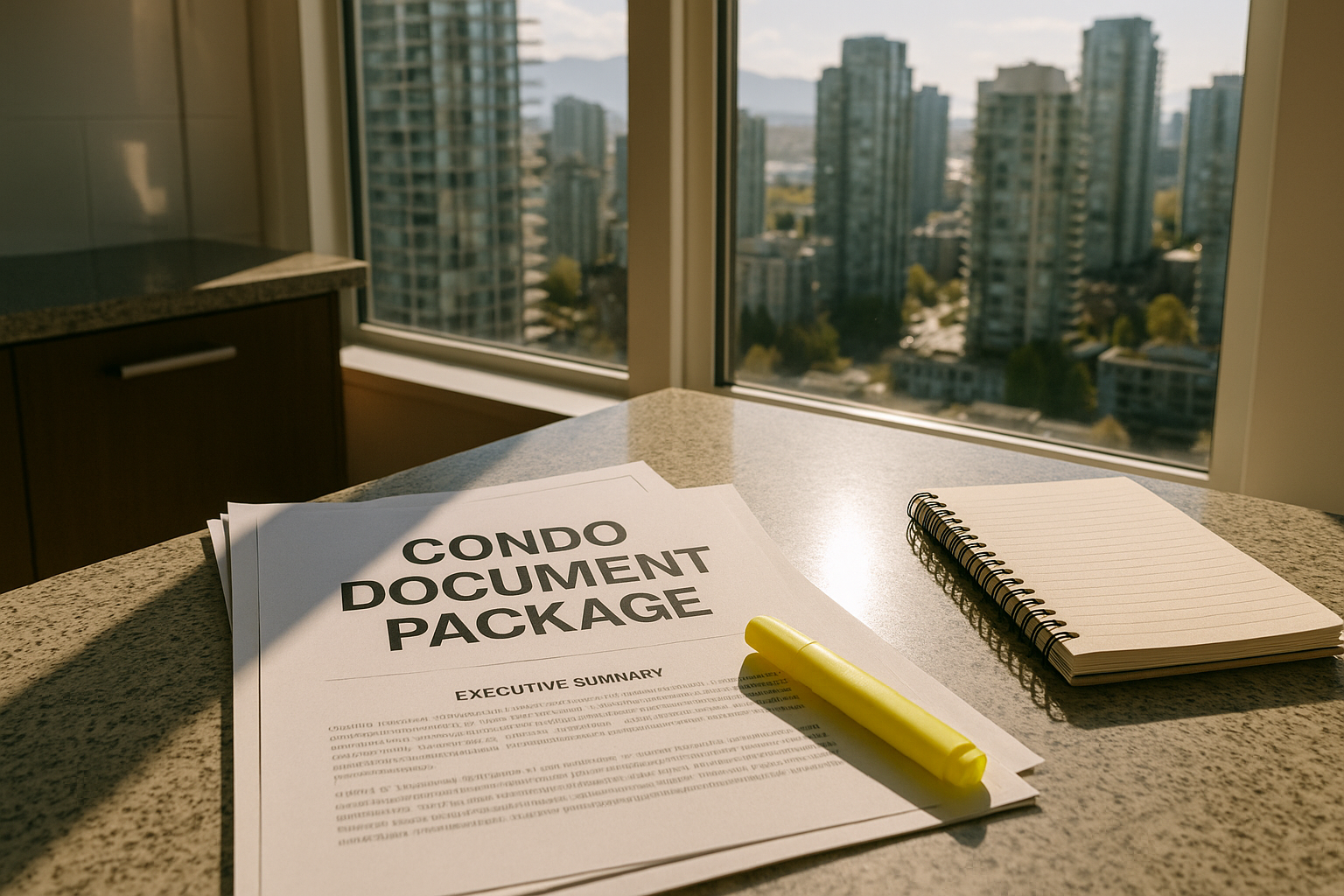
To assess a BC strata property, you need the building’s Form B, at least two years of strata council minutes, recent AGM and SGM minutes, the most current depreciation report, strata financial statements, bylaws, and insurance certificate. These documents reveal the building’s financial health, rules, repair plans, and any disputes.
If you’re looking at a property in Vancouver, expect to see these in well-prepared listings. If documents are missing, ask your realtor to request them from the listing agent or strata manager before offering. Reviewing these records up front can prevent surprises later.
How do you spot financial red flags in strata documents?
Financial red flags in BC strata documents include a low contingency reserve fund balance, planned or recent special levies, overdue maintenance, or unclear repair costs. Start with the Form B summary and cross-reference the latest financial statements and depreciation report for upcoming expenses.
Watch for buildings in Burnaby or Richmond where the contingency fund appears small for the number of units or planned repairs. If the strata is discussing big projects—like roof or envelope replacement—ensure there’s enough set aside, or be prepared for a future levy.
If financial details seem unclear or unusually complex, using a tool like SearchStrata can help buyers break down these summaries and catch subtle issues.
Why review strata bylaws and rules before you offer?
Strata bylaws and rules can restrict pets, renovations, and even your use of common areas — though the strata can't restrict the rental of your lot — so it's essential to read them carefully before offering. Some buildings in Surrey limit the number or size of pets or have restrictions on leasing units. Others may have rules around short-term rentals or age restrictions.
Make sure the bylaws match your lifestyle and long-term plans. If you plan to rent out your unit, confirm whether rentals are permitted and if there’s a waitlist. Always check the most up-to-date bylaws on file and confirm with your realtor if anything is unclear.
What should you look for in the depreciation report and engineering studies?
The depreciation report estimates major repair and replacement costs for the building’s common property over a multi-year period. Review the summary for upcoming repairs, projected timelines, and funding recommendations.
Look for warning signs like deferred maintenance, high-priority repairs, or recommendations for special levies. In Victoria, many older buildings may have roof, elevator, or plumbing projects flagged in the next 3–5 years. Confirm the depreciation report you receive is the most recent version—strata corporations must follow provincial regulations on how often these are updated, so verify current requirements.
How can you use the subject-removal window to finish your due diligence?
The subject-removal window gives buyers a final chance to review strata documents and resolve concerns before their offer becomes firm. Once you have an accepted offer, use this time to ask additional questions, request missing documents, and consult professionals about any red flags.
Explore unresolved issues from your initial review—like unclear financials or litigation—by asking the strata manager or your realtor for clarification. This is also when you might seek legal advice if you find a rule or dispute that concerns you. To understand what’s possible and how to protect yourself, see Subject Removal in BC Real Estate: What Buyers Need to Get Right.
Frequently Asked Questions
What is a Form B in BC strata purchases?
A Form B is a mandatory disclosure statement providing key facts about a BC strata lot, including the current owner, monthly fees, bylaw amendments, parking and storage, insurance details, arrears, and any outstanding legal claims. It’s essential for buyers to review before making an offer.
What does a depreciation report tell BC buyers?
A depreciation report outlines the projected timeline and costs for major repairs and replacements in a strata’s common property. It helps buyers estimate future special levies or maintenance needs. Always confirm you have the most current report and consult a professional if you have questions.
Why should buyers review strata meeting minutes?
Strata meeting minutes reveal ongoing issues, upcoming repairs, disputes, and the tone of council-owner communications. Reviewing at least two years of minutes helps buyers spot patterns and potential risks before committing to an offer.
What are special levies and why do they matter to buyers?
Special levies are extra payments collected from strata owners to fund repairs or major projects when the regular budget or contingency reserve fund is insufficient. Buyers should investigate any past or upcoming special levies to avoid unexpected costs after purchase.
How do I check for litigation involving a BC strata?
Litigation or lawsuits involving a BC strata are typically disclosed in the Form B, meeting minutes, and sometimes in AGM packages. Ask your realtor for more details or request clarification from the strata manager if any legal action is mentioned.
Conclusion
Carefully reading BC strata documents before you write an offer is one of the best ways to avoid costly surprises and protect your purchase. While this process can be daunting—especially in a busy market—having a checklist helps you spot red flags early, ask sharper questions, and negotiate from a position of strength. For added peace of mind, you can use SearchStrata to analyze your strata package and flag any risks or restrictions that matter to you before you commit.