Quick Answer
The contingency reserve fund (CRF) is your strata’s financial reserve for major repairs and unexpected expenses—think roofs, elevators, or emergency plumbing. Owners should regularly review CRF balances and planned expenditures in the annual financial statements and depreciation report. A healthy CRF helps your strata avoid sudden special levies and ensures long-term building upkeep, but the ideal balance depends on your building’s age and needs—verify specific requirements with your strata manager or a trusted professional.
What is the contingency reserve fund and why does it matter?
The contingency reserve fund (CRF) is a special account every BC strata must maintain to cover major repairs, replacements, and emergencies outside the ordinary budget. This fund acts as a financial buffer, preventing the need for sudden special levies when major expenses arise.
A strong CRF is crucial for the health of your building and your peace of mind as an owner. Without adequate reserves, your strata may face tough decisions—either delay needed repairs or issue hefty special levies to owners. Reviewing your CRF’s balance and upcoming commitments helps you spot early signs of financial stress or good stewardship.
Owners in both Vancouver and smaller BC cities face similar CRF questions, whether your building is new or has decades of history. The stakes are especially high in older buildings where big-ticket repairs are more likely. Keep in mind, the exact minimum CRF contribution required is set by provincial regulation—verify the current standard with your property manager or through government resources.
How do I read my strata’s CRF statements and balance sheets?
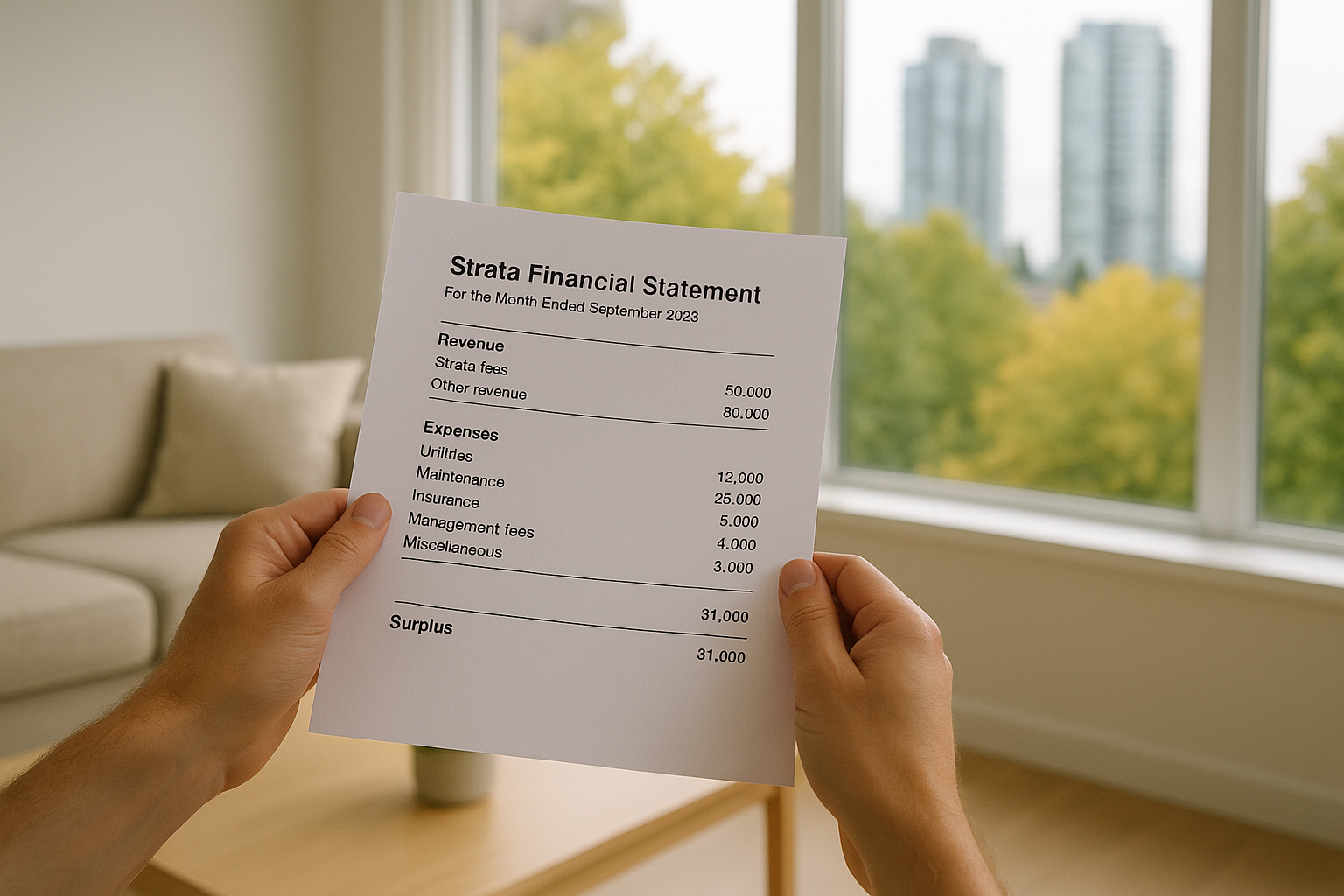
To understand your strata’s CRF, start with the annual financial statements and the most recent AGM package. Look for a line item or section titled “Contingency Reserve Fund,” usually listed alongside the operating fund.
The CRF section will show the opening balance, inflows (like annual contributions and interest), and outflows (approved spending on major repairs or upgrades). If you spot large withdrawals, check meeting minutes or depreciation report notes for explanations.
A healthy CRF typically shows stable or growing balances, and transparent notes about how funds are used. If you’re unsure about reading these numbers, refer to resources like How to Read and Understand Strata Financial Statements as a BC Owner or ask your council or property manager for a walk-through.
How much should be in the CRF?
There’s no single “right” amount for every strata—the ideal CRF balance depends on your building’s size, age, and upcoming maintenance needs. Provincial regulations set a minimum contribution standard, but many experts suggest aiming higher for buildings with looming repairs.
Some stratas in Burnaby or Surrey use their depreciation report to guide how much to save. Typically, the report outlines projected capital costs for the next 30 years and can flag if your fund is falling short.
If your CRF seems low compared to future repair needs, bring this up at your AGM or with your council. Owners can vote to increase contributions, strengthening the fund and reducing the risk of special levies.
How do the depreciation report and CRF work together?
The depreciation report is your building’s roadmap for long-term repairs and replacements, and the CRF is the savings account to pay for those projects. The report estimates when and how much major items—like roofs, windows, or elevators—will need attention.
Compare your depreciation report’s schedule to your CRF balance and cash-flow projections. If the report predicts $500,000 in roof repairs within five years but your CRF only holds $200,000, your strata may be headed for a shortfall. Regularly reviewing both documents together helps you spot gaps early.
You can read more on how to interpret these reports in Reading Your Strata’s Depreciation Report Like an Owner (Not a Buyer). Always double-check the current depreciation-report requirements with your property manager, as provincial rules around these reports have changed in recent years.
What happens if the CRF isn’t enough?
When the CRF balance is too low to cover urgent or planned expenses, your strata may need to issue a special levy—an extra payment from each owner to make up the difference. This is often a last resort, as special levies can be financially stressful and may require a vote at a general meeting.
It’s better for everyone if the CRF is proactively managed to avoid these situations. Owners can encourage council to review contribution rates, follow the depreciation report’s recommendations, and communicate openly about upcoming costs.
Want to stay ahead of these risks? Tools like SearchStrata make it easier to analyze your strata’s financial health and flag potential funding gaps before they become a crisis.
Frequently Asked Questions
What is the main purpose of the contingency reserve fund in a BC strata?
The contingency reserve fund is used to pay for major repairs, replacements, and unexpected building expenses that fall outside the regular operating budget.
How can I find out my strata’s current CRF balance?
You can find your strata’s CRF balance in the annual financial statements, often provided in the AGM package or available for inspection upon written request.
Is there a minimum amount my strata must keep in the CRF?
BC regulations set a required minimum contribution for CRFs, but the actual amount depends on your building’s needs—confirm the current requirement with your strata manager or government resources.
Can the strata use CRF money for any expense?
CRF funds can generally only be used for major repairs, replacements, or emergencies, and often require owner approval at a general meeting for planned expenditures.
What should I do if I think the CRF is too low?
Bring your concerns to strata council or at an AGM, and consider advocating for increased contributions or a review of the depreciation report to plan for future needs.
Conclusion
Paying attention to your strata’s contingency reserve fund is one of the smartest things you can do as an owner. By reviewing your CRF balance, understanding the connection with the depreciation report, and raising concerns early, you help protect your investment and keep your building running smoothly. If you want to simplify this process, tools like SearchStrata can help you analyze your strata’s financial documents and give you confidence about where your building stands.