Quick Answer
Before writing an offer on a BC strata property, carefully review the strata documents for financial health, building risks, bylaw restrictions, and upcoming expenses. Look for minutes, Form B, financial statements, depreciation reports, insurance policies, and any evidence of special levies or litigation. Identify any red flags or surprises—this pre-offer check can protect you from costly mistakes.
Why Read Strata Documents Before You Offer?
Reading strata documents before you write an offer lets you identify risks and restrictions early—before your deposit and emotions are on the line. If you wait until after your offer is accepted, you may feel pressured to overlook issues in the scramble to meet subject removal deadlines.
With Vancouver’s market still active, especially heading into the summer, buyers may be tempted to skip this step for speed. However, a well-reviewed strata package can save you months of regret or unexpected costs. Major red flags—like a depleted reserve fund or a bylaw that bans your dog—are much easier to walk away from before you’re contractually committed.
Which Strata Documents Should You Review?
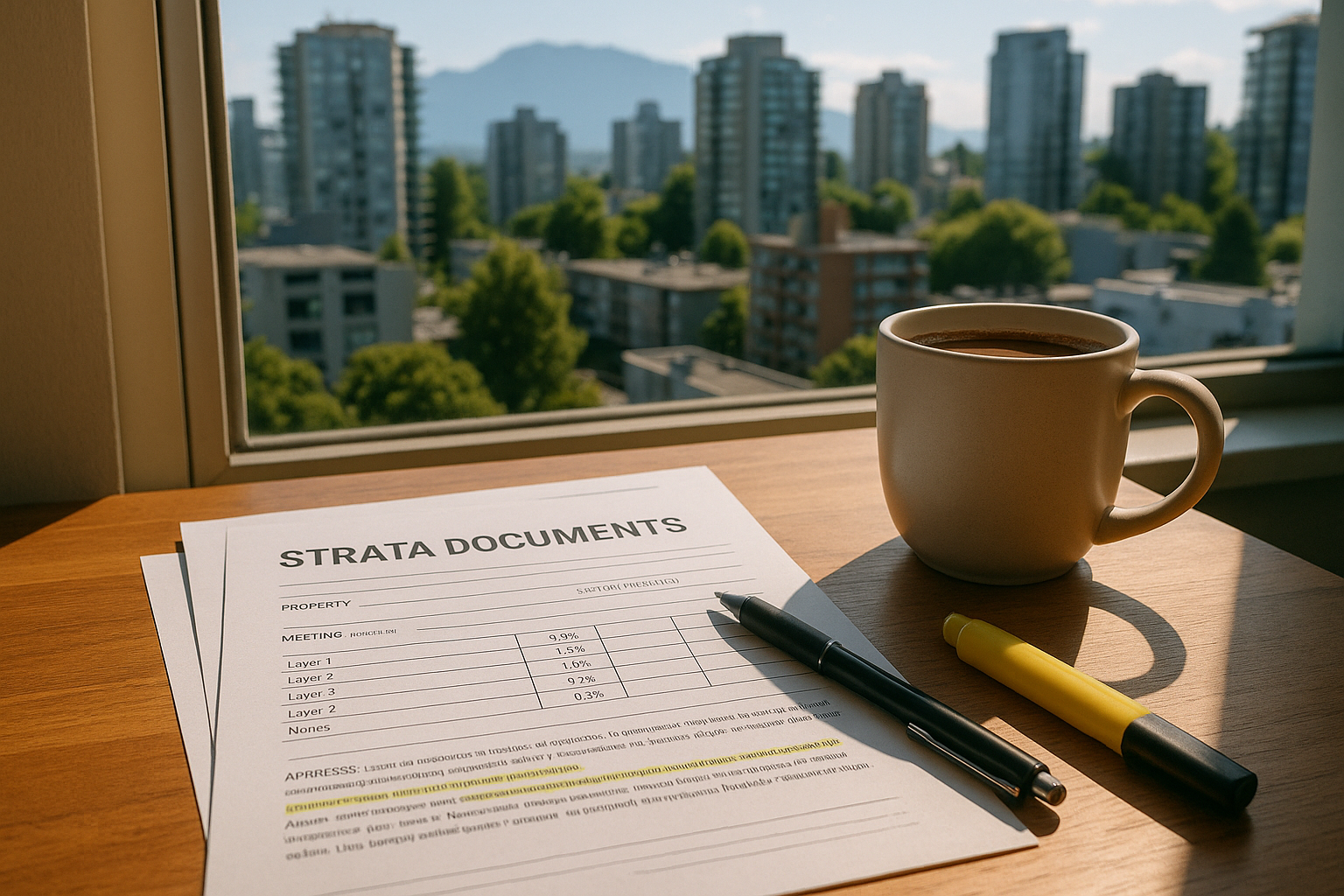
The best due diligence starts with a complete document package. Before considering an offer, ask for:
- The latest Form B Information Certificate (with attachments)
- Two years of AGM/SGM and council meeting minutes
- Recent financial statements and budgets
- The most recent depreciation report
- Insurance summary or certificate
- Current bylaws and rules
- Any records of special levies, litigation, or major repairs
If you’re buying in Vancouver, Burnaby, or elsewhere in Metro Vancouver, most listing agents can provide these—but always confirm you have the latest versions. Incomplete documents mean you’re missing part of the picture.
What Are the Biggest Red Flags?
The key risks in strata documents usually fall into three groups: unexpected costs, building issues, and restrictions on your lifestyle or use.
- Financial red flags: Low (or negative) contingency reserve fund balances, frequent special levies, or rising strata fees with no clear plan can signal future assessments.
- Physical/building issues: Depreciation reports outlining urgent repairs, ongoing water ingress, or seismic deficiencies should all be cause for close scrutiny.
- Restrictions: Bylaws banning pets, rentals, or home-based work may limit your enjoyment or resale options. Confirm the current status, as bylaws can change.
Also review insurance policies for unusually high deductibles or recent claims—a rising trend in Surrey and Richmond buildings—and scan minutes for ongoing disputes or upcoming lawsuits.
How to Use the Subject-Removal Window If You Proceed
If the strata documents check out and you decide to write, your offer should still include a subject to strata document review. This window is your last opportunity to confirm there are no major risks before going firm.
Use this time to:
- Re-read everything, looking for anything you might have missed under pre-offer time pressure
- Ask the strata manager or listing agent for any documents that were missing or unclear
- Consult your Realtor, and consider a BC real estate lawyer if you spot legal complexity or litigation
The Home Buyer Rescission Period ("cooling-off period") gives you a short time to rescind after acceptance, but it’s not a substitute for careful document vetting. For a deeper step-by-step, see Subject Removal in BC: How to Navigate the Decisive Step in Your Home Purchase.
Can SearchStrata Make This Easier?
Reviewing strata documents can be overwhelming, even for experienced Realtors. SearchStrata uses AI to scan minutes, Form B, financials, and reports for warning signs, upcoming costs, and bylaw risks—saving you hours and highlighting hidden details.
Whether you’re a buyer hoping for peace of mind or a Realtor needing to triage documents for multiple clients, you can try SearchStrata free to streamline your pre-offer due diligence and avoid expensive surprises.
Frequently Asked Questions
How recent should the strata documents be when I review them?
You should review the most up-to-date versions—ideally documents from the current and previous year, and the most recent Form B and depreciation report. Check with the listing agent if anything is missing or appears outdated.
Can I rely on the listing agent’s summary of strata issues?
While listing agents may provide helpful summaries, always review the original strata documents yourself or with your Realtor, as omissions or misunderstandings can occur.
Does every strata property in BC have a depreciation report?
Most strata corporations in BC are required to have a depreciation report, but the frequency and exceptions can change. Always check the current legal requirement and whether a valid, up-to-date report is available.
What if the strata minutes mention a possible special levy?
If minutes reference a special levy, get clarification from the listing agent and factor this potential cost into your decision. Major levies can significantly affect your finances as a buyer.
Are all building defects disclosed in the strata documents?
Not necessarily—all known or suspected issues may not be documented, especially if recent or under investigation. However, meeting minutes and depreciation reports often provide early warnings.
Conclusion
Pre-offer strata document review is a crucial step for BC buyers and agents hoping to avoid unpleasant surprises. Taking the time to read minutes, Form B, bylaws, and financials—before writing—empowers you to make a confident, informed decision about each building. If you want to save time or spot hidden risks, tools like SearchStrata can help you analyze your strata package with confidence.