Quick Answer
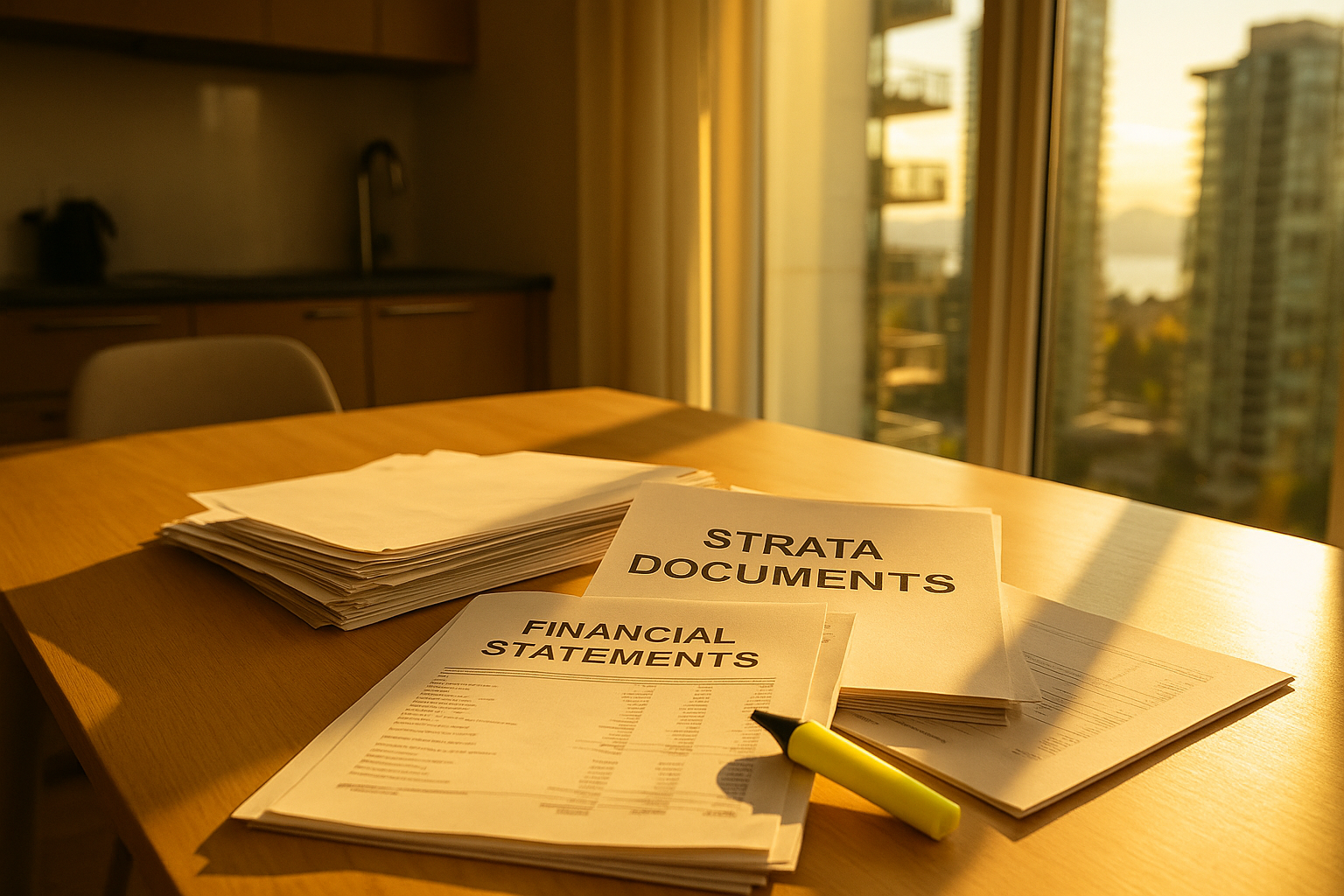
To vet a BC strata before writing an offer, carefully review the latest financials, depreciation report, Form B, and records of special levies. Check for a healthy contingency reserve fund (CRF), looming major expenditures, new or recurring special levies, and bylaw restrictions. Reviewing these documents early helps you spot financial or legal red flags before you commit.
Why strata financials and CRF health matter before your offer
Strata financial statements reveal the building’s true financial health well before you write an offer. Healthy financials (including a well-funded contingency reserve fund, or CRF) signal that the strata is prepared for both routine maintenance and unexpected issues. Low CRF balances, recurring deficits, or large accounts receivable may point to upcoming levies or deferred repairs. In Vancouver and similar markets, these details can seriously impact your total cost of ownership.
What to look for in depreciation reports and planned projects
Depreciation reports forecast major expenses and inform your risk as a buyer. These reports (mandatory on a government-set schedule for most BC stratas—always verify the current law) project when and how much major building systems will cost to repair or replace. Watch for upcoming “big ticket” items like roof, plumbing, or elevator replacement. If the strata has deferred its report or the schedule is unclear, clarify with your Realtor and verify the current regulatory requirements for the building.
How can buyers spot special levy risk in strata documents?
Special levies are extra charges owners pay when the CRF isn't enough to cover big projects. Signs of risk include recent or repeated levies, discussion in council minutes about major repairs, or references in the depreciation report to unfunded projects. Check for upcoming votes on levies and review meeting minutes for owner concerns. In Burnaby, for example, strata buyers often face large levies for exterior upgrades—checking the documents in advance is your best defense.
Why Form B is a financial snapshot you can’t skip
The Form B isn’t automatically part of every BC strata sale — the strata has to provide one within a week when an owner, a purchaser or someone authorized by them asks for it — and it gives a current snapshot of the unit and building’s financial obligations. It discloses any amount the owner owes the strata, any approved special levy still to be paid, which parking stalls and storage lockers are allocated to the unit, and a summary of the strata's insurance coverage. Always verify that the Form B is current—BC law sets a maximum age, so request an updated form if needed. Note that Form B won’t show everything; pair it with council minutes and the depreciation report for a fuller picture.
How to use the subject-removal period for deeper due diligence
The subject-removal window is your last opportunity to confirm there are no hidden financial or legal risks. Once your offer is accepted with conditions, use this time to re-check any documents, clarify questions with property management, and consult your Realtor or, if necessary, a real estate lawyer. Tools like SearchStrata can help you analyze your strata package quickly, but always confirm findings with a qualified professional before you remove subjects.
Frequently Asked Questions
What does a healthy contingency reserve fund (CRF) look like?
A healthy CRF generally covers upcoming repairs noted in the depreciation report and avoids frequent special levies, but check the current requirements and benchmarks for your strata’s size and age.
How recent should the financial statements and depreciation report be when reviewing a strata?
Aim to review the most recent financial statements and a current depreciation report; ask your Realtor to verify that these documents meet legal currency requirements.
What’s the difference between a regular strata fee and a special levy?
Strata fees are monthly charges for operating and reserve expenses, while special levies are one-time charges for extraordinary expenses not covered by the existing reserve.
Can a buyer get out of an accepted offer if strata documents reveal a red flag?
If your offer is subject to satisfactory document review, you can walk away during the subject-removal period if you uncover a major concern; seek advice from your Realtor or a legal professional.
Do all BC stratas have to have a depreciation report?
Most strata corporations in BC are required to maintain a depreciation report on a schedule set by regulation, but always verify your building’s current requirement as rules can and do change.
Conclusion
A thorough review of strata financials, depreciation reports, special levies, and the Form B is essential before committing to an offer in BC. By checking these records carefully—especially in active markets like Vancouver, Burnaby, and Surrey—you’ll avoid surprises and be better prepared for subject removal. For buyers and Realtors who want fast, organized document analysis, consider using SearchStrata to spot issues sooner and make your due diligence more efficient.