Quick Answer
To defensibly document BC strata council decisions, record every council resolution in clear, unambiguous language in the official meeting minutes, including who moved and seconded, the exact wording of the decision, and the vote result. Good documentation preserves council intent, demonstrates a fair process, and protects the strata if a decision is later challenged by owners or the Civil Resolution Tribunal (CRT).
Why defensible documentation matters for BC strata councils
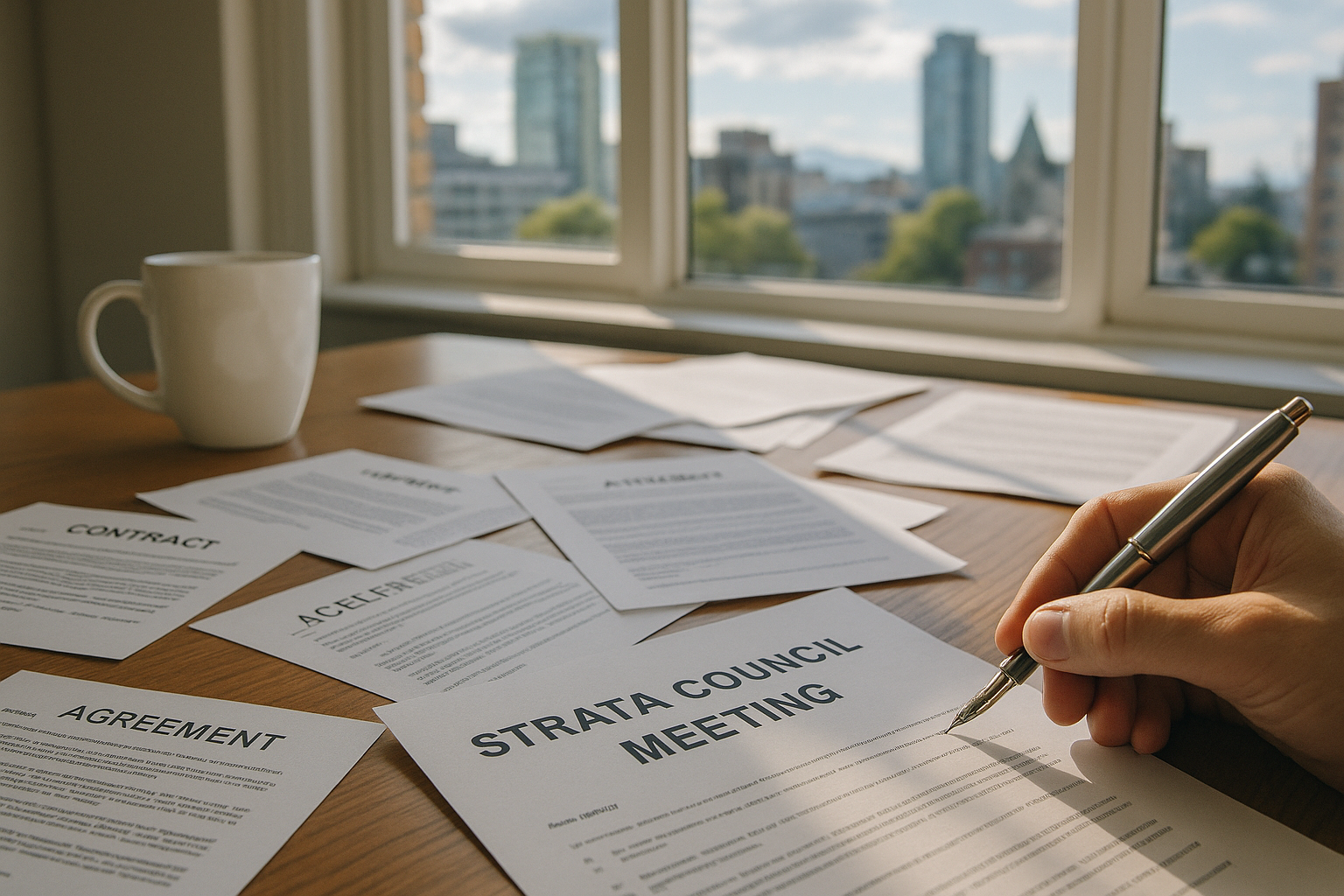
Clear documentation of council decisions is critical for transparency, owner trust, and legal protection. When minutes record exactly how and why a decision was made, councils are better prepared if an owner challenges the process or outcome. Defensible records also support council memory for future audits, transitions, or CRT disputes. In cities like Vancouver or Victoria, where complex buildings and vocal owner groups are common, documenting resolutions well often makes the difference between a resolved question and a protracted dispute.
What should a defensible council resolution include?
A defensible council resolution should state the decision clearly, identify the mover and seconder, and record the vote. The essentials are:
- The exact wording of the motion (not just a summary)
- Names of the council members who moved and seconded
- The result of the vote (e.g., 'Carried unanimously,' 'Carried 4 in favour, 2 opposed')
- Any key rationale or context if needed for owner understanding
Avoid vague language. For example, instead of "A discussion was held about landscaping," document: “Moved by Smith, seconded by Lee: That the council approve the contract from GreenScape Landscaping for $6,000 plus applicable taxes. Carried unanimously.”
How much detail and rationale should minutes include?
Strata council minutes should capture the motion, who moved and seconded, and the vote, but not a transcript of discussion. Briefly noting key rationale, especially for contentious or significant decisions, helps owners and future councils understand not just what was decided, but why. However, avoid including sensitive or confidential details. If the council considered owner complaints or legal advice, it’s often enough to note that the topic was discussed in camera, with only the outcome (if any) recorded.
What does the Strata Property Act require for council decisions?
The Strata Property Act generally requires that minutes record council decisions and make them available to owners—but does not mandate a specific format or level of detail. Best practice, endorsed by BC’s CRT and many property management firms, is to ensure council resolutions are clearly worded and the voting result is evident. Remember, owners can request minutes and may rely on them to challenge a decision’s validity, so you want your records to be defensible. For more on minutes, see Orderly Minutes, Orderly Strata: Council Strategies for Reliable Meeting Records.
How can councils make documentation easier and more consistent?
Using a standard template for minutes and resolutions ensures nothing gets missed—even when council membership or management changes. Many Vancouver and Surrey property managers rely on council meeting templates with dedicated spaces for each agenda item, motions, movers, seconders, and vote tallies. Digital tools, including document analysis platforms like SearchStrata, can also help councils review past minutes and flag inconsistencies or missing details across years of records, supporting a stronger institutional memory.
Frequently Asked Questions
What details must be included in a BC strata council resolution?
A BC strata council resolution should include the exact wording of the decision, who moved and seconded, and the vote result. Additional rationale is useful for clarity but not always required.
Should council minutes record who voted for or against a motion?
Council minutes typically state the result (e.g., carried unanimously or the number for/against) but do not need to name individual votes unless requested. However, transparency may call for more detail on contentious issues.
Are council decisions valid if not properly recorded in the minutes?
Council decisions made at a properly convened meeting are generally valid, but failing to document them can make later enforcement or explanation difficult and may be questioned if a dispute arises.
Can strata owners access council meeting minutes?
Yes, BC strata owners have the right to access council meeting minutes, though confidential (in camera) portions may be redacted or recorded separately as required by law.
How soon should strata council minutes be distributed to owners?
The Strata Property Act requires minutes to be made available to owners and tenants promptly after the meeting. Best practice is for council to review and distribute draft minutes within a few days, but verify the current regulatory expectation.
Conclusion
Documenting council resolutions clearly is one of the best ways BC strata councils can defend their decisions and support owner trust. Consistent, detailed records reduce exposure to disputes and help future council members carry forward your building’s governance standards. For teams looking to analyze past minutes or identify gaps, platforms like SearchStrata can quickly surface where standards may have slipped and help your strata maintain defensible records for years to come.