Quick Answer
To defensibly approve a contract, BC strata councils must follow a transparent, documented process that demonstrates diligence, fair consideration, and compliance with the Strata Property Act and bylaws. This includes proper notice, evaluation of bids or proposals, clear council resolutions, and maintaining a paper trail in the strata’s records. Councils should always verify current legal requirements and seek advice from qualified professionals when needed.
Why Contract Approval Demands Council’s Full Attention
Contract approvals are among the most consequential decisions a strata council makes, shaping the corporation’s finances and risk profile for years. Councils and property managers aren’t just box-ticking—every major contract (from roofing to landscaping) obligates the owners as a whole. If due process isn’t followed, the council risks legal challenge, owner disputes, or in some cases, personal liability.
The Strata Property Act sets expectations for council stewardship, but each strata’s bylaws may also specify approval thresholds or consultation obligations. This makes it essential to check your strata’s rules before proceeding. High-stakes contracts—such as elevator replacements in a Vancouver high-rise or envelope repairs in Victoria—require particular scrutiny, both in process and documentation.
What Steps Should Council Follow Before Signing a Contract?
Council must use an open, repeatable process for contract approval to withstand scrutiny. This typically involves:
- Defining the project scope and desired outcomes.
- Soliciting multiple bids or proposals when practical, documenting why if sole-sourcing.
- Disclosing and managing any council member conflicts of interest upfront.
- Reviewing contract terms in detail—payment schedules, termination clauses, warranties.
- Discussing and voting on the contract at a properly convened council meeting.
- Recording a clear, detailed resolution in the minutes, noting votes for and against.
Make sure your process aligns with your strata’s bylaws and any relevant procurement policy. For a deeper dive on this, refer to How to Tender and Approve Strata Contracts Defensibly: A Council Member’s Guide.
How Should Councils Handle Documentation and Transparency?
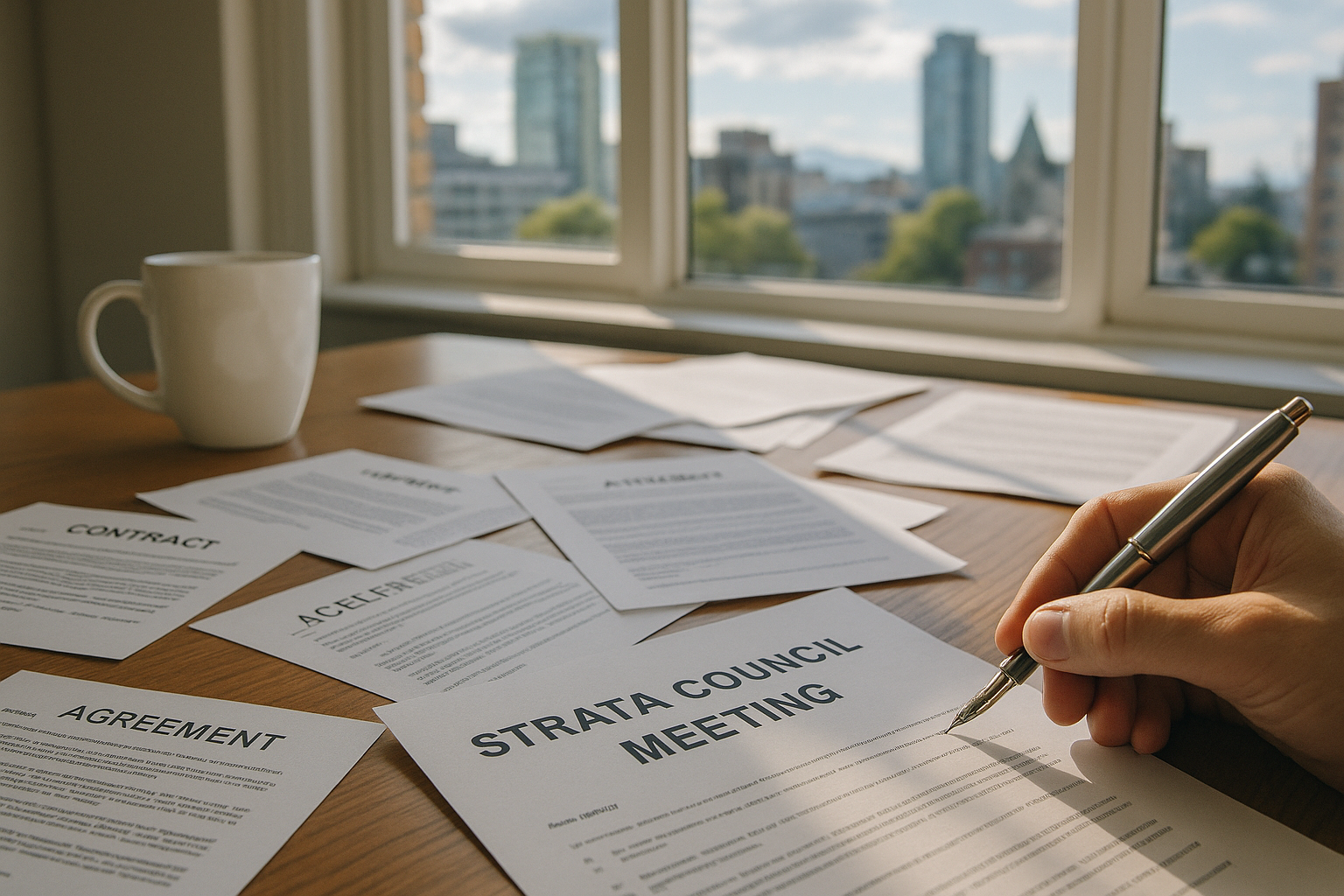
Every step of the contract approval process should be documented, from initial quotes to the final signed agreement. Councils should keep:
- Written records of all bids and proposals.
- Meeting minutes that capture the discussion and resolution.
- Copies of signed contracts and related correspondence in the strata’s records.
Transparency doesn’t mean all details are public to every owner at every stage, but owners must be able to understand how decisions were made. Accurate, timely documentation also protects councils if a contract is later challenged. SearchStrata’s analysis tools can help ensure your records package includes all essential documents and highlights any missing or unusual items.
What Pitfalls Should Council Members and Managers Watch For?
Common pitfalls include informal approvals between meetings, incomplete disclosure of conflicts, and signing contracts before formal council resolution. These shortcuts create risk: an internal approval defect usually won't void the contract itself — unless the other side knew or should have known about it — but it can still spark owner complaints to the Civil Resolution Tribunal.
Other areas to monitor include:
- Ambiguity in contract terms or scope of work.
- Overriding established procurement protocols for expediency.
- Failing to verify contractor insurance and licensing.
If there’s uncertainty—such as about approval thresholds or special levy requirements—seek advice from a strata lawyer or a qualified property management professional before proceeding. For best practices on documenting council decisions, see Defensible Strata Decisions: How to Document Council Resolutions That Stand Up to Scrutiny.
How Can Councils Build Institutional Memory for Future Contracts?
Creating a defensible contract approval process isn’t just about today’s decision; it’s about ensuring future councils can learn from your experience. Maintain a centralized record of:
- Comparable past contracts and vendor performance notes.
- Procurement policies and council resolutions on major approvals.
- Lessons learned—what worked, what needed improvement.
This context helps new council members and managers avoid repeating mistakes and supports more informed, efficient decision-making. Tools like SearchStrata can assist in organizing and retrieving historical contract-related documents when questions arise.
Frequently Asked Questions
Does strata council need a 3/4 vote to approve contracts?
Most routine contracts can be approved by majority vote, unless your bylaws or the Strata Property Act require a higher threshold for specific expenditures. Always verify the current requirements for your specific contract type.
Can council sign a contract without owner input?
Councils generally have authority to approve contracts for routine expenditures, but significant or special projects may require owner approval or a special levy. Review your bylaws and seek advice for large commitments.
What should be included in council minutes for contract approvals?
Minutes should record the contract under consideration, key terms discussed, the outcome of the vote, and any disclosed conflicts of interest. Clear, concise minutes help defend your process if challenged.
How many quotes should strata council obtain before approving a contractor?
Best practice is to obtain at least three quotes, but this is not a legal requirement. Document your rationale if you solicit fewer, especially for urgent or specialized work.
Who keeps the signed strata contracts and related records?
The strata corporation is responsible for keeping all contracts and related documentation as part of its official records, typically managed by the property manager or council secretary.
Conclusion
Approving contracts is a core governance function for BC strata councils, requiring discipline, transparency, and attention to detail. Documented processes and clear resolutions protect both your strata corporation and individual council members from future disputes. If you’re looking to streamline your records review or need to ensure your meeting package includes every key document, consider using SearchStrata—it's built to support council members and property managers with the tools you need to govern with confidence.