Quick Answer
To run a defensible strata contract tendering and approval process, BC strata councils should seek multiple bids, clearly document criteria and decisions, avoid conflicts of interest, and communicate key steps to owners. Proper records—including contracts, vendor proposals, and council resolution details—are critical for transparency and protecting the council from challenge later.
Why Defensible Tendering Matters for BC Strata Councils
A defensible contract process protects your council from owner complaints, disputes, and scrutiny by regulators. If an owner or government body questions your contract choice, you must show the process was fair, open, and transparent.
Strata service contracts—whether for landscaping, repairs, or major capital projects—often attract attention because of their cost and impact on the community. In BC cities like Vancouver and Surrey, strata councils that skip bid processes or rely on informal arrangements can face accusations of favouritism or fiscal mismanagement.
Having clear, documented procedures for tendering and approving contracts demonstrates good faith and diligence. It also strengthens your council’s position if a decision is challenged by an owner or through dispute resolution.
What Does a Defensible Tendering Process Look Like?
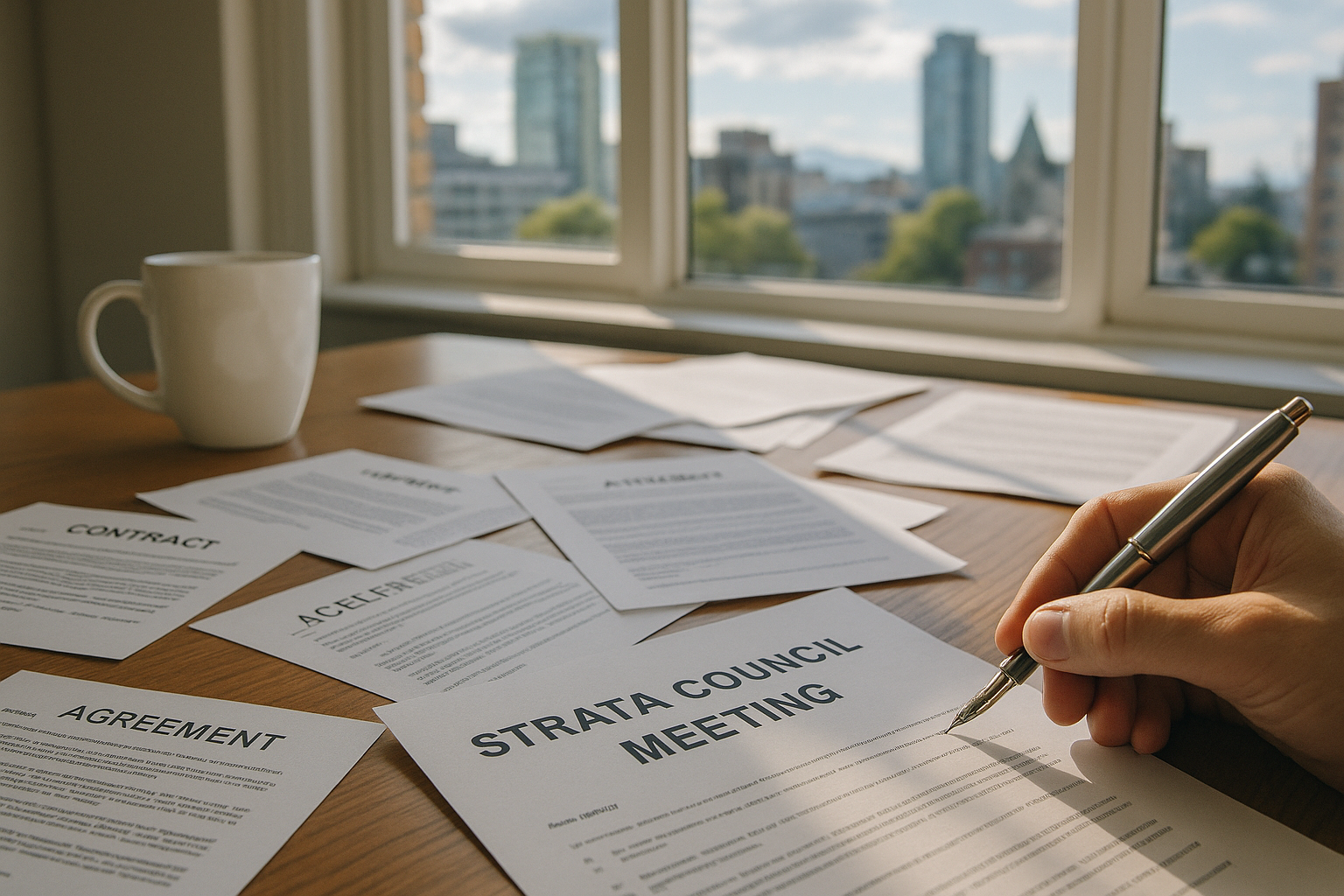
A defensible process means obtaining competitive bids, using transparent criteria, and documenting each step clearly. Ideally, council should seek at least two or three written quotes for any significant contract.
Set out evaluation criteria in advance—such as price, scope, experience, references, and insurance—then apply them consistently to all bids. Avoid informal or verbal quotes for major work. Minutes should reflect the process: how many bids were received, who recused themselves if needed, and the reasons for the final selection.
For larger projects, councils may want to prepare a simple RFP (request for proposals) outlining the work, timelines, and submission requirements. This helps level the playing field for bidders and ensures better documentation.
How Should Councils Evaluate and Approve Vendors?
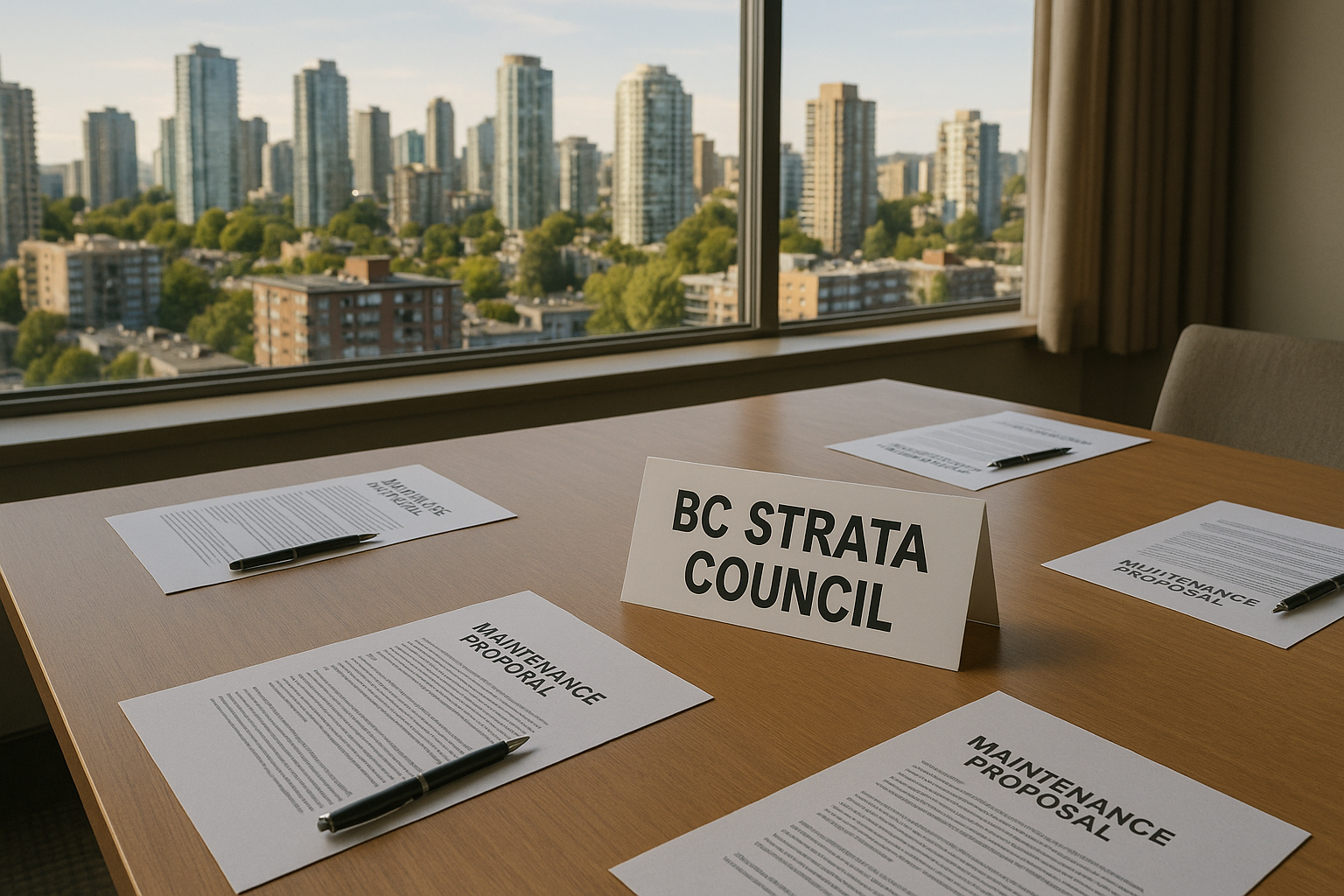
Councils should base approval on a balanced review of price, service, references, and fit—not just the lowest bid. Document the evaluation and final vote in your council minutes.
Discuss any potential conflicts of interest and, if relevant, record any recusals. Council resolutions to approve contracts should be clear and specific, noting the vendor, contract amount, and any terms or contingencies. If the contract value is above a certain amount or for a particular duration, check whether a ¾ vote or owner approval is needed under your bylaws (and confirm the current requirements).
If the process or decision is likely to be controversial, consider proactively communicating the rationale to owners. This helps manage expectations and can decrease objections after the fact.
Key Records to Keep: Protecting Council and Institutional Memory
Councils should retain all quotes received, the final contract, related correspondence, and the meeting minutes documenting the discussion and approval. These records demonstrate due diligence if the decision is later questioned.
Organize contract records systematically—ideally as part of your strata’s official Section 35 records. For long-term service contracts, flag renewal and review dates clearly so future councils are not caught unaware.
If you’re building a “living” council binder or digital archive, include a summary sheet of contract history and rationale. For tips on maintaining effective council records, see Preserving Your Strata’s Institutional Memory: How to Build and Maintain a Living Council Binder.
Common Pitfalls and How to Avoid Owner Disputes
Common pitfalls include informal approvals, lack of bids, failing to document the rationale, or conflicts of interest. These issues often lead to owner challenges or even Civil Resolution Tribunal claims.
To reduce risk:
- Always seek written bids for major contracts.
- Disclose and manage conflicts of interest openly.
- Ensure council minutes are clear and defensible—avoid off-the-record conversations.
- Communicate major contract decisions and the process to owners, especially if there’s likely to be controversy.
When in doubt, ask your property manager or a trusted advisor to review your process—or try SearchStrata free to check your documentation for gaps.
Frequently Asked Questions
Is a formal tendering process mandatory for all strata contracts?
The Strata Property Act does not require a formal tender for every contract, but councils are expected to act in good faith and document their process. Check your strata’s own bylaws and policies for stricter requirements.
Can a council member vote on a contract if they have a relationship with a vendor?
Council members must declare any conflict of interest and recuse themselves from discussion and voting if there is a real or perceived connection to a vendor to avoid challenges later.
What if only one contractor bids on the work?
If only one bid is received after reasonable effort, document your attempts to solicit others and the rationale for proceeding, then consider communicating this to owners for transparency.
Who should sign strata contracts?
Usually, the council president and one other designated council member sign on behalf of the strata, but confirm requirements in your bylaws and consult your property manager or legal advisor if unsure.
How long should strata contract records be kept?
Strata records, including contracts and related correspondence, should be retained according to the records retention schedule set by the Strata Property Act regulations. Confirm the current requirements.
Conclusion
A defensible contract process doesn’t have to be complicated, but it should be systematic, transparent, and well documented. Good records and open communication shield your council from unnecessary challenges and help future council members understand decisions years later. If you want extra peace of mind, tools like SearchStrata can help you analyze your strata’s contract documentation for completeness and defensibility.