Quick Answer
To enforce bylaws and fines fairly in a BC strata, council must follow the Strata Property Act’s due process: provide written notice of the alleged breach, an opportunity for the owner or tenant to respond, and make decisions free of bias. Consistency, documentation, and clear communication are essential for defensible enforcement and minimizing disputes.
What are council’s core responsibilities in bylaw enforcement?
Council’s main duty is to enforce bylaws consistently and in compliance with the Strata Property Act, ensuring all owners and tenants are treated equally. This involves investigating complaints, following due process, and imposing fines or other remedies where justified.
Bylaw enforcement is not optional—council has a statutory obligation to act when aware of violations, unless the strata would be significantly disadvantaged by enforcement. For example, in a Richmond strata, ignoring repeated parking bylaw breaches can set a problematic precedent.
Property managers must support council by documenting complaints and actions, tracking timelines, and preparing required notices. Good record-keeping helps protect both council and management company.
Above all, council must avoid arbitrary or selective enforcement. Documenting your process helps demonstrate fairness if challenged.
How does due process work under the Strata Property Act?
Due process means council cannot fine or take action until it has notified the owner/tenant in writing of the alleged bylaw breach and given a reasonable opportunity to respond. This ensures transparency and fairness.
The written notice must specify the particulars of the alleged violation and how the recipient can respond (usually in writing or at a hearing). Many Vancouver stratas use a form letter; be sure it’s tailored to your community’s bylaws.
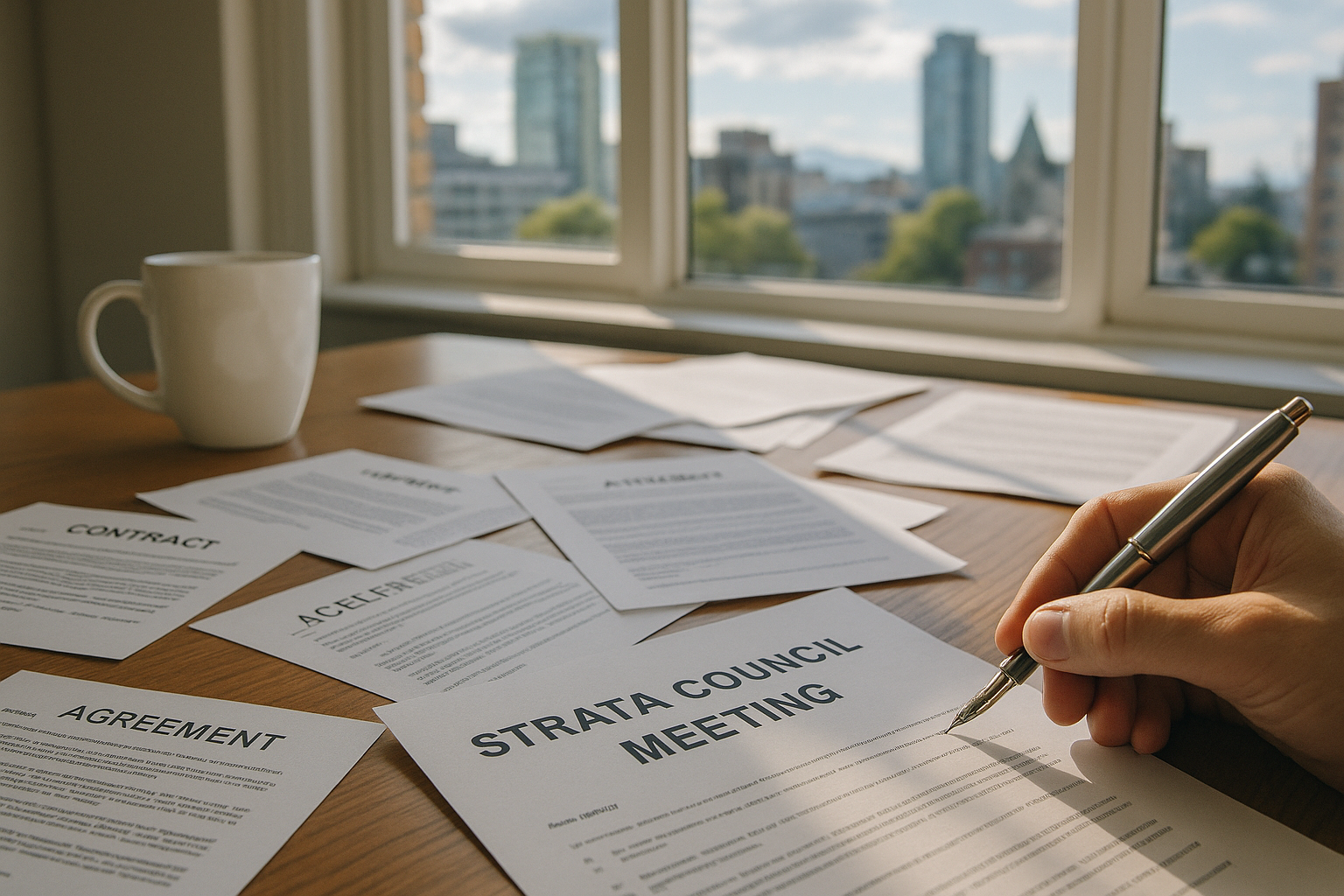
After receiving a response or allowing sufficient time, council deliberates and decides. All correspondence and council decisions should be documented in the minutes, while respecting privacy. For more on proper minute-taking, see Writing Strata Council Minutes That Protect Your Strata—Now and Years Later.
Failure to follow due process can result in CRT reversals of fines or orders against the strata. Stick to the procedural steps every time.
What makes a bylaw complaint and fine defensible?
A defensible complaint and fine meet these criteria: clear evidence of a bylaw breach, proper written notice, fair opportunity to respond, and a documented, unbiased council decision. These factors show the council acted reasonably and according to law.
Supporting evidence can include date-stamped photos, correspondence, and incident logs—not hearsay or anonymous accusations. In Surrey, for example, noise complaints often benefit from multiple written complaints and audio/video timestamps.
Council decisions should be recorded with enough detail to show the rationale without naming individuals in the public minutes. If challenged by the Civil Resolution Tribunal (CRT), these records are your defense.
Consistency is equally important. If an owner can show selective enforcement, the CRT is far less likely to uphold the fine.
How can councils avoid conflicts of interest and protect confidentiality?
Council must recuse any member with a personal stake in a complaint—for example, if the respondent is a close friend or family member. This preserves the integrity and defensibility of the process.
Confidentiality is critical. Do not discuss details of alleged breaches or fines outside the council or beyond what must be disclosed to the person accused. Even among council, only discuss as required for decision-making.
Property managers should ensure sensitive documents and communications are stored securely, with access controls. When drafting responses or notices, avoid unnecessary personal information.
Council members sometimes face pressure from neighbours or other owners; remind all parties that confidentiality and impartiality are for everyone’s benefit.
What steps help prevent escalation to the Civil Resolution Tribunal?
Thorough documentation, clear communication, and a willingness to resolve complaints informally can often prevent matters from reaching the CRT. Many disputes start with a misunderstanding or poor communication.
Before imposing a fine, consider whether a warning or informal reminder could resolve the issue. Offer mediation or encourage dialogue between neighbours when appropriate, especially for minor or first-time breaches in Victoria.
When fines are necessary, make sure every step—from notice to council decision—is complete and well documented. Respond promptly and factually to owner follow-ups.
If a dispute does go to the CRT, your records and a clearly documented process will give your strata the best chance for a favourable decision.
Frequently Asked Questions
Can a strata council refuse to enforce a bylaw?
A strata council must generally enforce bylaws unless doing so would cause the strata corporation significant disadvantage, such as unreasonable legal costs or practical impossibility.
What is the maximum fine allowed for a bylaw breach in BC?
The maximum fine is set by the strata’s bylaws but cannot exceed the limits in the Strata Property Regulation. Verify current limits, as they can change.
Can council discuss bylaw breaches with other owners?
Council must keep details of alleged bylaw breaches confidential and may only disclose information to those directly involved or as required by law.
What if an owner disagrees with a fine or council decision?
An owner can request a hearing before council and, if unsatisfied, may file a dispute with the Civil Resolution Tribunal, which will review the fairness and process of the enforcement.
How should council handle anonymous complaints?
Council should treat anonymous complaints with caution, seeking corroborating evidence before proceeding. Decisions should not be based solely on unverified, anonymous information.
Conclusion
Fair bylaw enforcement is both a legal requirement and essential to maintaining trust in your strata community. By following due process, documenting every step, and acting impartially, your council can confidently defend its decisions if challenged. For property managers and council members across BC, these best practices help avoid costly disputes and foster a stronger, more harmonious strata. If you want to streamline document review or organize your records more efficiently, consider using SearchStrata to support your governance work.