Quick Answer
BC strata AGMs rely on clear, defensible proxy and voting procedures to safeguard decisions. Strata councils must follow the rules under the Strata Property Act and their own bylaws for proxies, voting thresholds, and registration, and should document the process thoroughly. Mistakes with proxies or voting process are a leading cause of meeting disputes—review current requirements and clarify procedures in advance.
What are the rules for proxies at a BC strata AGM?
Proxy use at BC strata AGMs is governed by both the Strata Property Act and the strata’s bylaws, and the rules must be checked each year. A proxy allows an eligible owner to appoint another person to vote on their behalf at the general meeting.
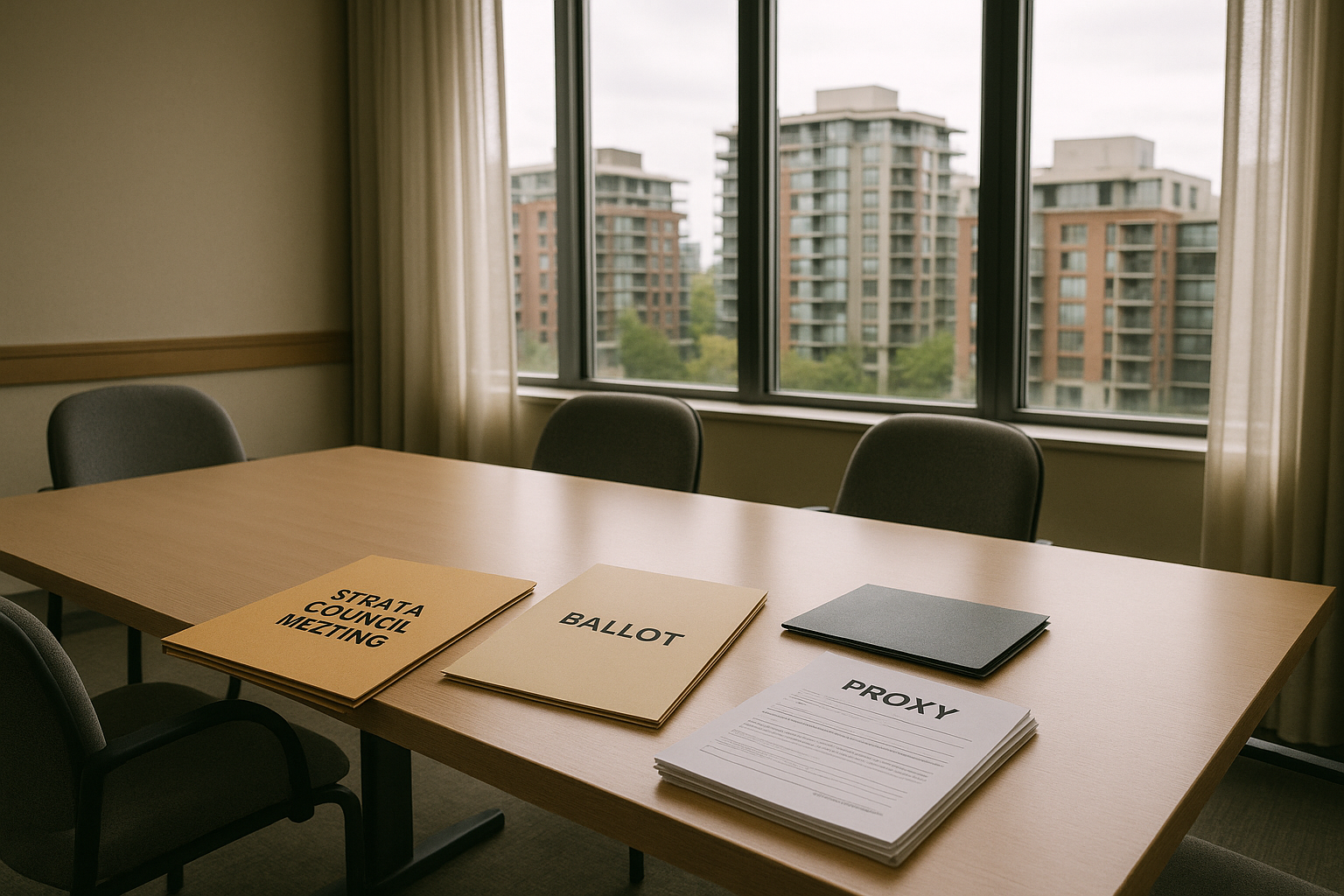
Generally, a proxy must be in writing and signed by the appointing owner, and the form must be submitted as instructed by the strata. The proxy holder can be anyone (not just a resident)—but some stratas restrict who may hold or accept proxies, so review your bylaws carefully. Councils and managers should verify all proxies at registration and keep copies for the records.
How can council prevent confusion during proxy registration and voting?
To prevent disputes, strata councils should prepare clear instructions for proxy submission and registration before the AGM. Provide owners with an approved proxy form and instructions on how to complete and submit it—including the deadline and to whom it must be delivered.
At registration, council or management should:
- Check each proxy for signatures and completeness
- Confirm the identity of the proxy holder
- Mark eligible voters (including proxies) on the sign-in sheet
Careful record-keeping at this stage protects the integrity of the meeting and supports defensible council decisions.
What voting thresholds apply, and why do they matter?
Different AGM decisions require different voting thresholds under BC law and the strata’s bylaws. Most routine business passes with a simple majority, but bylaw changes, special levies, and some other matters require a 3/4 vote or even unanimous consent.
Before the AGM, council should:
- Identify all agenda items needing higher voting thresholds
- Clarify these requirements in the Notice of Meeting and at the meeting itself
A misstep here (using the wrong threshold) can invalidate major decisions, so it’s essential to verify requirements in the Strata Property Act and seek professional advice if unsure.
What should you document to defend decisions if challenged?
Strata councils should keep a careful paper trail of all voting and proxy-related actions at the AGM. This includes:
- The original proxies (or copies) submitted
- A registration list of attendees and proxy holders
- Vote tallies and methods (show of hands, secret ballot)
- How voting thresholds were determined and announced
If a decision is challenged—at the Civil Resolution Tribunal, for example—these records will be key to defending your process. For more on defensible documentation, see Defensible Strata Decisions: How to Document Council Resolutions That Stand Up to Scrutiny.
What are common proxy and voting pitfalls—and how can you avoid them?
Common mistakes at AGMs include unclear proxy forms, incomplete registrations, mishandling abstentions, and confusion about who may (or may not) vote. These errors can lead to disputes, owner complaints, or invalidated decisions.
To avoid such pitfalls, councils should:
- Circulate clear proxy and voting instructions with the meeting notice
- Train registration staff on procedures
- Announce voting procedures and thresholds at the start of the meeting
- Keep all documentation as part of official meeting records
For a streamlined approach to document review and record-keeping, councils can use SearchStrata to organize and analyze AGM packages and minutes.
Frequently Asked Questions
Can an owner appoint a proxy who does not live in the building?
Yes, in most cases the proxy holder does not have to reside in the building, but check your strata’s bylaws for any restrictions on proxy appointments.
What happens if a proxy form is incomplete or unsigned?
An incomplete or unsigned proxy form is generally invalid and should not be accepted for voting at the AGM. Councils should check all forms during registration.
Can a proxy holder vote on every issue at the AGM?
A proxy holder can usually vote on all matters unless the proxy form limits their authority for specific motions or agenda items.
How should abstentions be recorded at the AGM?
Abstentions should be recorded in the minutes and are generally not counted as votes for or against a resolution, but always verify your strata’s bylaws and procedural rules.
What is the best way to handle disputes about proxies after the AGM?
If disputes arise, review the relevant records and consult legal or professional advice. Maintaining thorough documentation of the registration and voting process is the best defence.
Conclusion
AGM proxies and voting procedures are common trouble spots for BC strata councils—but with careful planning and thorough documentation, you can prevent most problems before they start. Review your bylaws, clarify instructions, and keep good records at every stage. When you need to analyze or organize AGM minutes or proxy forms, consider using SearchStrata to simplify your document management and safeguard your council’s decisions.