Quick Answer
BC strata councils must use the correct voting threshold—majority, 3/4, or unanimous vote—depending on the decision being made. Key actions like special levies, bylaw amendments, and significant changes to common property require a 3/4 vote of owners at a general meeting, not just a council resolution. Using the wrong threshold can void a decision and expose the strata to disputes, so always check the Strata Property Act and ensure votes are recorded clearly in the minutes.
What Do 'Majority', '3/4', and 'Unanimous' Votes Really Mean?
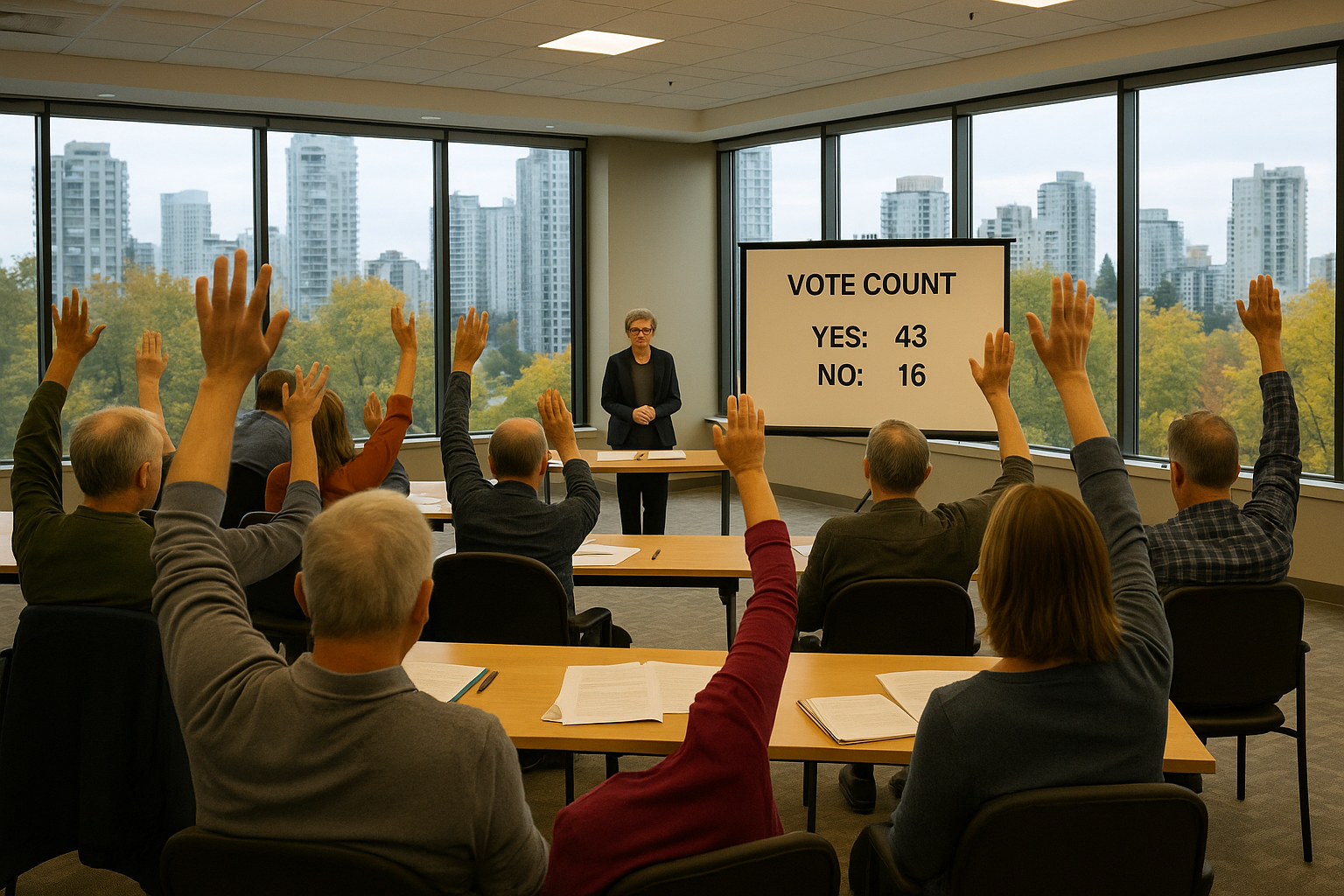
A majority vote means more than half the votes cast; a 3/4 vote means at least three-quarters of votes cast at a general meeting; and a unanimous vote means all the votes of all eligible voters. These definitions come from the Strata Property Act and are not interchangeable. Abstentions do not count as votes cast. For example, if 54 owners attend an AGM and 50 vote on a resolution, only those 50 votes are counted—so 38 'yes' votes are required for a 3/4 resolution to pass. Careful calculation is essential to avoid accidental failures or illegitimate adoptions of important decisions.
Which Strata Decisions Require Each Type of Vote?
Routine council business is typically decided by majority vote at council meetings, but the Act reserves several key decisions for owner approval at specific thresholds.
A 3/4 vote at a general meeting is required for:
- Approving a special levy (for example, major roof replacement in Vancouver)
- Amending, adding, or repealing a bylaw
- Approving significant changes to the use or appearance of common property (with the Act’s narrow safety and emergency exceptions)
Unanimous votes are rarely needed but are required for high-bar items like amending the Schedule of Unit Entitlement, which requires a unanimous vote of all eligible voters. Always verify which threshold applies; overstepping can result in an invalid decision and costly do-overs.
How Do Abstentions, Proxies, and Quorum Affect the Outcome?
Abstentions are not counted as votes cast, so they do not affect the calculation for majority or 3/4 votes. Proxies must be in writing and signed by the person appointing them—strata bylaws may limit who can act as proxy, but notarization or witnessing is not required. Quorum for general meetings is one third of eligible votes present in person or by proxy. If quorum is not met within half an hour, the meeting is adjourned by law until the following week; at the reconvened meeting, whoever attends forms a quorum. Missteps here can invalidate even properly conducted votes.
Why Accurate Documentation and Communication Matter
Resolutions requiring 3/4 or unanimous votes must be included in full in the AGM/SGM notice package, and the results should be recorded with precision in the minutes. For bylaw amendments, remember the change only takes effect once filed at the Land Title Office—not simply when the owners vote. Clear documentation is a must when responding to owner challenges, records requests, or a Civil Resolution Tribunal dispute. For a deeper dive on proper minute writing, see Writing Defensible Strata Council Minutes: Protecting Your Strata’s History and Decisions.
How Can Councils and Managers Avoid Common Voting Pitfalls?
Common pitfalls include applying the wrong vote threshold, failing to include the full text of key resolutions in notice, or recording ambiguous results in minutes. Councils should double-check with their property manager, strata lawyer, or the Act itself before scheduling votes on significant issues. When in doubt, err on the side of transparency and meticulous record-keeping. For complex or high-stakes votes, tools like SearchStrata can help you review prior minutes, filed bylaws, and past resolution language quickly for defensible decision-making.
Frequently Asked Questions
What happens if a strata passes a special levy by majority vote instead of a 3/4 vote?
If a special levy is passed by majority vote instead of the required 3/4 vote, the decision is not valid under the Strata Property Act and could be overturned or challenged, possibly requiring the vote to be redone.
Can council alone amend or add to the strata's bylaws?
No, only the owners can amend, add, or repeal bylaws by passing a 3/4 vote at a general meeting and then filing the amendment at the Land Title Office. Council can make rules for common property use, but not bylaws.
If quorum is not met at the AGM, can the meeting proceed?
Without quorum, the AGM cannot proceed. It must be adjourned to the same day, time, and place the following week, and those present then form the quorum, regardless of numbers.
How should abstentions be treated during a 3/4 or majority vote?
Abstentions are not counted as votes cast when calculating the threshold for majority or 3/4 votes; only actual votes for or against are tallied.
Does a bylaw amendment take effect as soon as it passes at the meeting?
A bylaw amendment only takes effect once it has been filed at the Land Title Office. Until then, it is unenforceable, even if owners passed it by the required vote.
Conclusion
Getting voting thresholds and procedures right is central to sound strata governance in BC. Council members and managers who handle these details carefully reduce the risk of challenges and keep the corporation’s decisions credible. When faced with uncertainty about vote requirements or past governing documents, using a tool like SearchStrata can help you review past AGMs, bylaws, and resolutions for precedent and compliance. Solid documentation and attention to voting rules are key to running a defensible and effective strata council.