Quick Answer
Before writing an offer on a BC strata property, buyers must carefully review key strata documents such as meeting minutes, financial statements, depreciation reports, Form B, bylaws, and insurance summaries. Vetting these records helps you spot red flags, understand upcoming costs, and avoid future disputes. Thorough due diligence gives you the confidence to write a strong, informed offer—or to walk away if serious issues surface.
What strata documents should you request before making an offer?
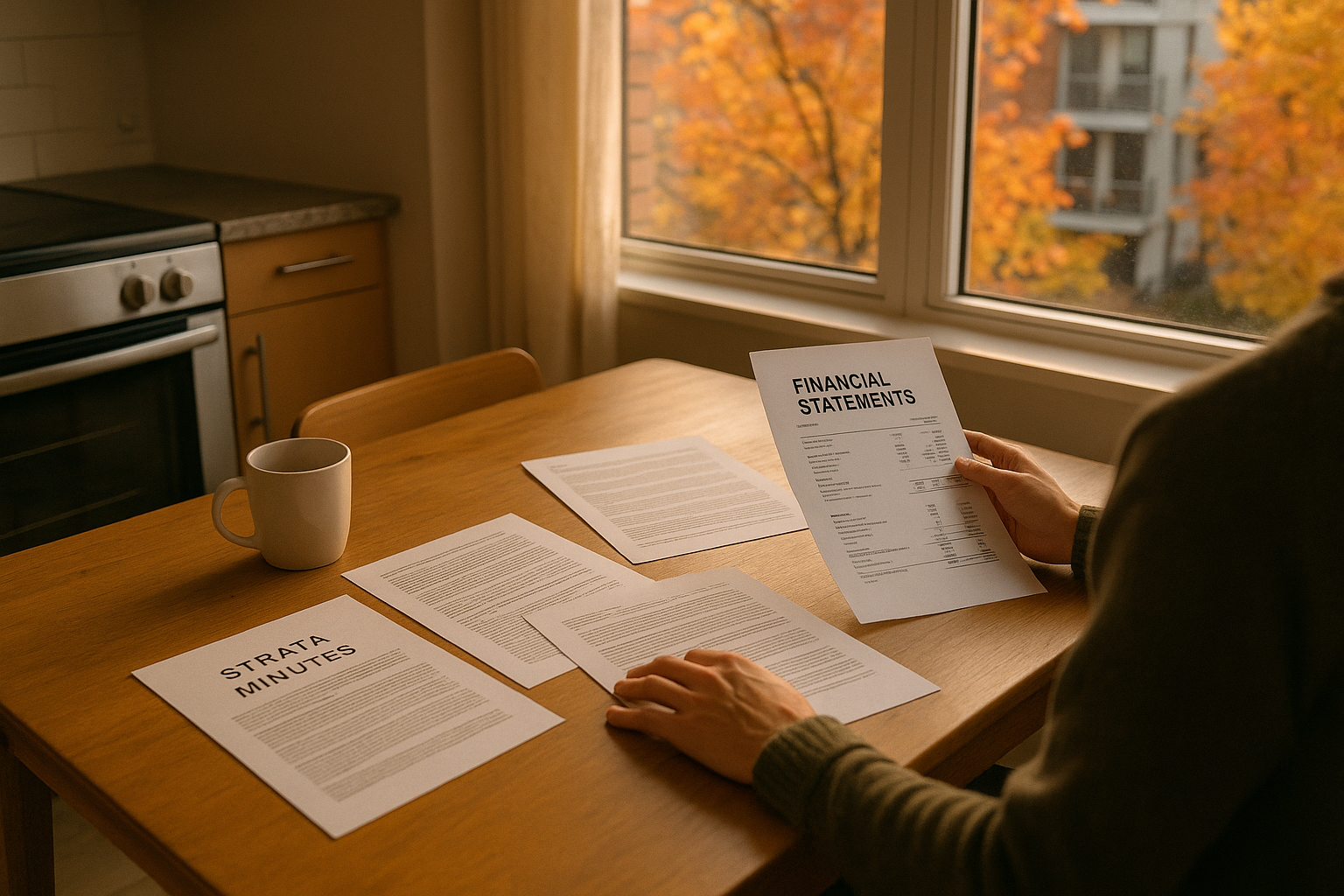
Buyers should request a complete set of strata documents before writing an offer, not just after. The essentials include:
- Form B Information Certificate (with attachments)
- 2 years of meeting minutes (AGM, SGM, council meetings)
- Recent financial statements and annual budgets
- Depreciation report
- Bylaws and rules
- Insurance certificate/summary
- Any notices of upcoming or recent special levies
If you’re buying in areas like Vancouver or Surrey, ensure you get these directly from the listing agent or the strata management company to avoid missing crucial updates.
How do you spot red flags in strata meeting minutes?
Red flags in minutes include mentions of major repairs, repeated complaints, unresolved insurance issues, or talk of legal disputes. Focus first on any recurring building issues or special levy discussions.
Read for:
- Multiple mentions of leaks, elevator repairs, or envelope issues
- Owners warning about rising insurance premiums
- Council discussing lawsuits or unresolved claims
- Evidence of poor communication or tension between council and owners
You can learn more about effective document review in How to Review Strata Meeting Minutes in BC’s Early Summer Market.
What does the Form B tell you about the unit and building?
The Form B summarizes the unit’s financial standing, parking/storage, restrictions, and outstanding levies. It’s the definitive status snapshot for buyers and lenders.
Key items to check:
- Current monthly strata fees
- Contingency Reserve Fund (CRF) balance—verify the number on Form B matches financials
- Upcoming or unpaid special levies
- Bylaw highlights, like pet or rental restrictions
- Parking and storage allocations
If discrepancies arise, such as missing parking stalls or surprise levy amounts, clarify with the listing agent before you write an offer.
How do you assess financial health—CRF, special levies, and big-ticket repairs?
Review the CRF balance, upcoming projects, and history of levies to gauge the building’s financial health. A low CRF or frequent special levies suggests risk of surprise costs.
Watch for:
- CRF balances that seem too low for the building’s age/size
- Large repairs flagged in the depreciation report without funding plans
- History of multiple special levies in the past 5 years
For a deeper breakdown on what numbers matter, see What to Watch for in Strata Financial Statements During BC’s Early Summer Market.
What bylaws, restrictions, and insurance details can affect your offer?
Bylaws and insurance rules can make or break your plans for living or renting in the unit. Read the full bylaw package and most recent insurance certificate.
Common pitfalls:
- No pets, size restrictions, or breed bans
- Rental restrictions or waitlists
- Age restrictions (less common, but still exist in some older stratas)
- Insurance deductibles so high they could impact mortgage eligibility
Always confirm the details found in the bylaws and insurance summary are up to date and match what’s on the Form B. If in doubt, ask your Realtor or consider using SearchStrata for a full AI-powered document analysis.
How should you use the subject removal window after your offer is accepted?
The subject removal window is your last chance to walk away if new strata issues arise—but most major red flags should be caught before you write the offer.
Use this period to:
- Double-check all strata records are provided and current
- Request clarifications or missing documents
- Seek input from your Realtor, lawyer, insurance provider, or SearchStrata’s analysis if needed
While urgent subject removals are common in a hot Vancouver market, never skip this step—even if you did a thorough pre-offer review. For a step-by-step explanation of this process, see Subject Removal in BC: How to Navigate the Decisive Step in Your Home Purchase.
Frequently Asked Questions
Why is it risky to write a subject-free offer on a strata property?
Writing a subject-free offer means you accept the unit without fully vetting the strata’s health or risks, leaving you exposed to costly surprises like special levies, lawsuits, or building defects.
Can a Realtor review strata documents for me?
A Realtor can help identify common red flags and interpret the documents, but ultimately, buyers are responsible for understanding the risks. Professional legal or specialized review is sometimes recommended.
What if some strata documents are missing or very outdated?
If key documents like recent minutes or the depreciation report are missing, request them before committing. Lack of transparency or outdated records should be a warning sign to proceed with caution—or reconsider the purchase.
How far back should I review strata minutes and financials?
Aim to review at least two years of meeting minutes and financials. This helps you identify patterns, track building projects, and spot recurring issues that may affect your decision.
Do all stratas in BC have depreciation reports?
Not all stratas have a current depreciation report, especially older or smaller buildings. However, most are required by the Strata Property Act to obtain one unless a 3/4 vote defers it, so check if it exists or has been recently waived.
Conclusion
Reviewing strata documents before writing your offer is one of the most critical steps in protecting your investment and peace of mind. By carefully reading meeting minutes, financials, Form B, bylaws, and insurance details, you put yourself in the driver’s seat—able to make a confident, informed decision, not just hope for the best. For fast, clear insights and to avoid missing key risks, consider using SearchStrata to analyze your strata package before moving forward.