Quick Answer
You can learn a BC strata building’s construction type, age, number of homes, strata identity, and known major repairs directly from public records—before you ever see its documents. BC Assessment, the Land Title and Survey Authority, strata filings, and municipal data each offer a different lens, helping buyers and agents spot wood-frame vs. concrete, leaky-condo-era risk, unit counts, and who manages the building. Reading these sources together gives crucial context for any Vancouver, Surrey, or Victoria strata search.
How do public records reveal a strata building’s structure and era?
Public records show what a building is made of and when it was built—details that shape its risks and maintenance needs. BC Assessment provides the year of construction and often the building's material (like wood-frame or concrete), which signals whether the building is from the leaky-condo era (roughly late 1980s to early 2000s) or from a period with modern rainscreen standards.
Land titles filings include strata plan numbers, letting you confirm the building’s legal identity and cross-reference against municipal records. A 1995-built, four-storey wood-frame in Vancouver might prompt different questions about envelope remediation than a 2010 concrete high-rise in Surrey. Era and materials are the starting point for understanding what issues might have already surfaced—or could arise.
What is a strata plan, and why does its number matter?
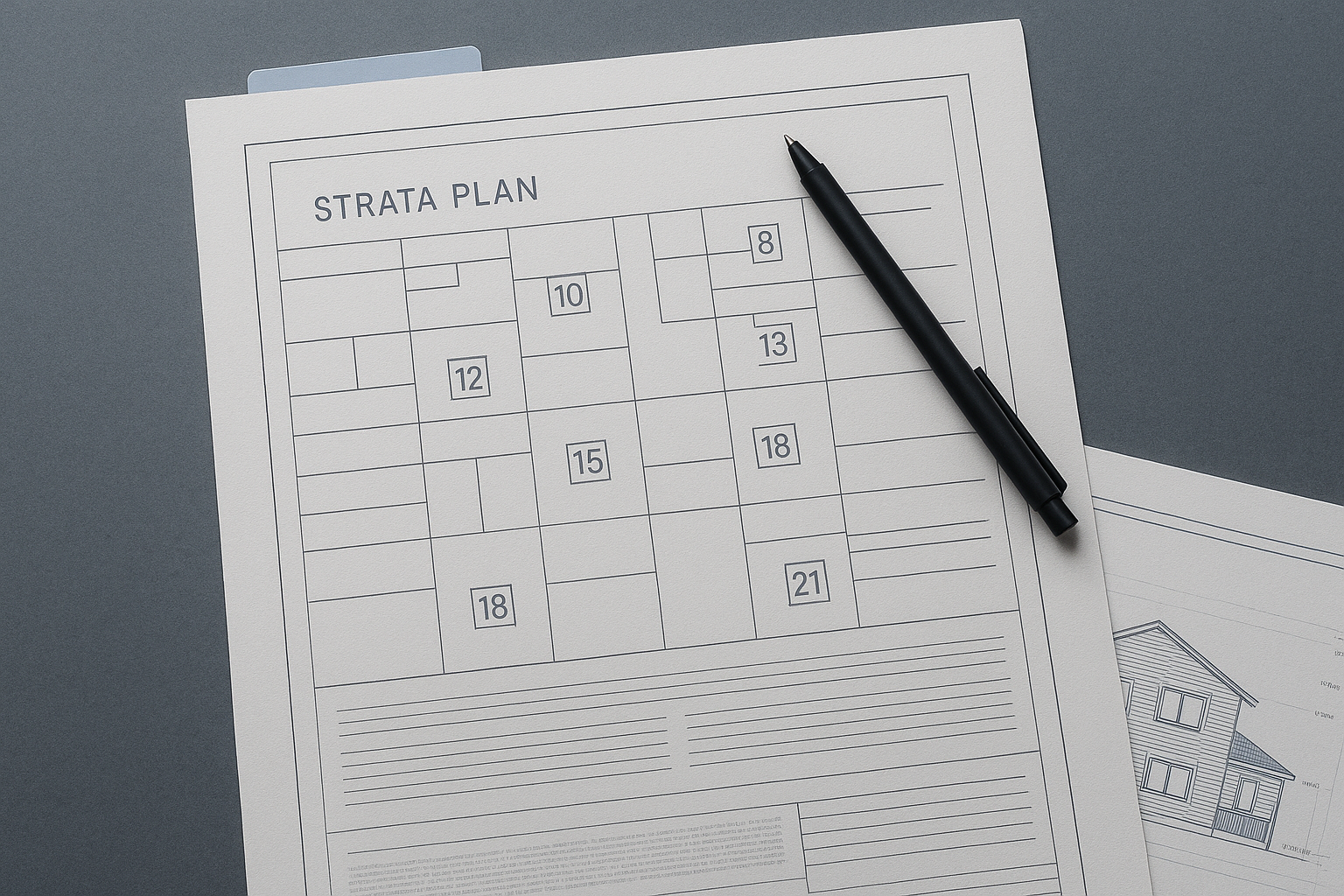
A strata plan number uniquely identifies each strata corporation in BC, acting as its legal fingerprint. The strata plan shows the layout, unit count, boundaries between strata lots, common property, and sometimes repair responsibility splits.
When searching for a building, matching its civic address to its strata plan number (found in Land Title records or on BC Assessment) helps avoid confusion, especially when similar buildings sit side by side in areas like Burnaby or Richmond. The strata plan is critical for verifying unit counts, checking for phased developments, and confirming that what’s listed in sales materials matches what’s legally registered.
How can you tell how many storeys or units a building has?
Public records estimate storeys and unit counts before you get the strata documents. BC Assessment often lists the number of storeys and total residential units. For some buildings, municipal open data (like the City of Victoria’s property information) will confirm this, along with permitted uses and rezoning status.
If you spot a listing for a 60-home strata but the strata plan and assessment show only 55 units, that’s a signal to ask for clarification—sometimes secondary suites or non-residential units account for the difference. Unit and storey count shape the building’s governance and long-term maintenance needs, and are early clues to watch for as you scan the public record.
Who manages a strata building, and where is that information found?
The strata management company, or strata agent, is usually listed in the most recent Form B (Information Certificate). Their name may sometimes appear in public sources like municipality business license records, but it is not reliably available in BC Assessment.
While management can change, seeing a professional strata manager is often a positive sign for mid- or large-size buildings in Coquitlam or New Westminster. If the building appears to be self-managed, this may suggest a smaller or more tightly-knit community; it also means owners take on more recordkeeping responsibility. Confirming current management prepares you for what to expect when requesting documents or raising concerns later.
How can you spot major remediations or upgrades before reading the documents?
Major building remediations—like full envelope replacements, rainscreen upgrades, or elevator modernizations—sometimes appear in municipal permit databases or on BC Assessment if the upgrade changed assessed value. News articles and strata plan amendments can also hint at big repairs.
Although full detail only emerges in the strata documents, public clues—such as a 1990s wood-frame building in Richmond with a recent building permit for envelope work—are worth noting. Use these signals to shape early questions and watch for gaps once you reach the full package. For a deeper look at what you can learn before the documents, see What You Can Learn About a BC Strata Building Before the Documents Arrive.
Frequently Asked Questions
What is the difference between a strata plan number and a civic address?
A strata plan number is a legal identifier for the strata corporation and appears in land title records, while a civic address refers to the building's street location. Both are needed to accurately identify a strata building.
How can I tell if a BC building is from the leaky condo era?
You can estimate the risk by checking the building’s construction year through BC Assessment; buildings from the late 1980s to early 2000s are often considered leaky condo era. Always verify details with a qualified building inspector or review the strata documents for remediation history.
Where do I find how many units are in a strata building?
BC Assessment, municipal open data, and the strata plan all list unit counts. Cross-check these sources to ensure accuracy, as discrepancies can highlight unregistered units or errors.
Can public records tell me who manages a strata building?
Yes, some municipal databases may list the management company, but the most reliable source is the most recent Form B, provided by the strata corporation.
How can I find out if a building has had major repairs or upgrades?
Building permit records, BC Assessment data, and news coverage may mention major work, but full details generally require reading the strata’s official documents such as minutes and depreciation reports.
Conclusion
Learning to piece together a BC strata building’s public identity—its structure, age, strata plan number, unit count, management, and early clues to remediation—gives buyers and agents a real advantage. While only the strata documents will reveal the full story, much can be discovered in the public record, letting you assess risk and ask sharper questions from day one. For an easy way to look up any BC strata building, free, start with SearchStrata.