Quick Answer
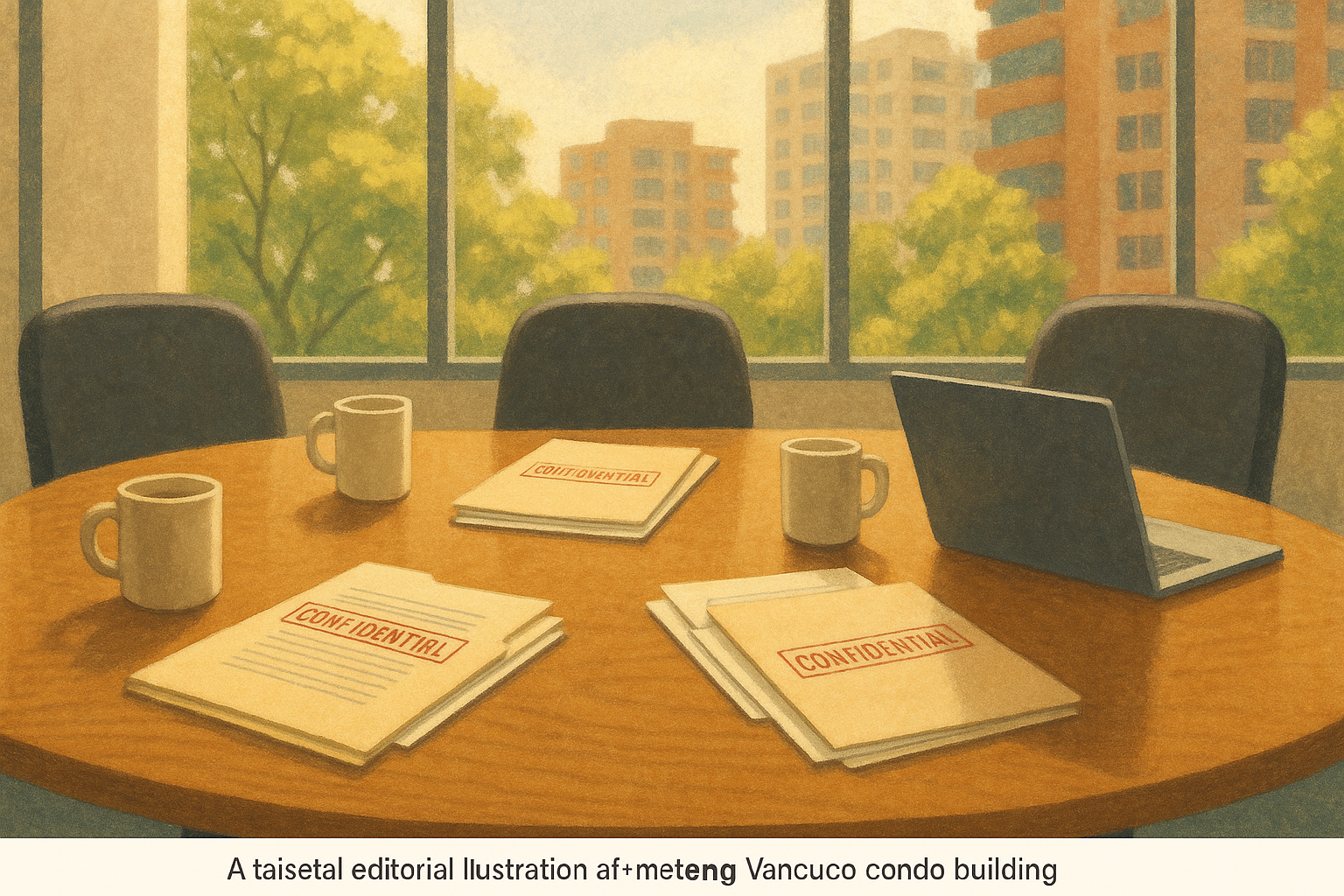
Strata council confidentiality in BC means council members must avoid sharing sensitive owner or council information outside authorized channels. Council communications—especially email, informal chats, and meeting minutes—are common sources of accidental disclosure. By using clear policies, separating confidential content, and being mindful of who receives what, council members and property managers can better protect privacy and maintain trust.
What is strata council confidentiality, and why does it matter?
Strata council confidentiality is the duty to protect sensitive owner and council information from unauthorized disclosure. This obligation is set by the Strata Property Act and privacy laws.
Council members often access personal owner details, bylaw complaints, legal advice, and other private matters. Leaking such information—even accidentally—can expose the strata to owner mistrust, privacy complaints, or legal action. Maintaining confidentiality is essential for council credibility and defensibility.
Typical confidential matters include:
- Owner complaints and bylaw enforcement
- Legal opinions or pending litigation
- Personal financial or health information
- Contract details before finalization
Always confirm what your strata’s bylaws or privacy policy say about handling confidential information.
Where do councils most often trip up? Email, minutes, and informal chats
Unintentional disclosure often happens through routine council business, especially emails, draft minutes circulated to owners, and casual hallway conversations.
Email is a risk because confidential attachments or sensitive discussions can be misaddressed, forwarded, or accessed on unsecured devices. Minutes are sometimes over-detailed, including complaint or discipline information that should be kept private. Even casual discussions with owners in the elevator can cross a line if council topics are shared inappropriately.
Strata council members in cities like Vancouver and Victoria face heightened scrutiny, given more frequent owner records requests and larger, more diverse communities. A single accidental disclosure can escalate quickly in these environments.
How can council emails stay confidential?
Council and manager emails should keep confidential matters in separate threads or files and use clear subject lines indicating sensitivity. Limit recipients to only those who need to know.
Best practices include:
- Label sensitive topics as ‘Confidential’ in subject headings
- Avoid using personal email accounts for council business
- Double-check attachments and recipient lists before sending
- Use password protection for especially sensitive attachments—ask your property manager for technical support if needed
When in doubt, err on the side of keeping information within council and the property manager only, unless otherwise advised by the strata’s legal counsel.
What should—and should not—go in public minutes?
Public minutes must record decisions and necessary context, but should avoid including owner names or detailed complaint information. Only record what is required for transparency and compliance.
Minutes should:
- Summarize complaint outcomes without identifying details
- Avoid including legal opinions or privileged advice
- Not record debates verbatim—stick to resolutions and key rationales
- Keep confidential appendices (if allowed by your bylaws) separate from the main minutes
For a deeper look at defensible minute-taking, see Orderly Minutes, Orderly Strata: Council Strategies for Reliable Meeting Records.
How should council handle confidentiality in casual discussions and transitions?
Council members should avoid discussing council business or owner-specific matters in common areas, elevators, or social settings. Confidentiality extends beyond formal meetings.
During council transitions, outgoing members should brief incoming ones in a private setting, ensuring sensitive information is passed on securely. Written summaries or key documents should be stored securely—not circulated widely—so new members get necessary background without broad exposure.
Council chairpersons and property managers can set the tone by reminding team members, especially during AGMs or owner Q&As, about what is and isn’t appropriate to discuss. See Preserving Strata Memory: How to Transition Between Councils Without Losing Critical Knowledge for more on this topic.
Frequently Asked Questions
What type of strata council business is always confidential?
Matters involving owner complaints, bylaw enforcement, legal advice, and pending litigation are generally considered confidential and should not be disclosed to non-council members.
Can council members be held personally liable for breaching confidentiality?
While most council business is protected if duties are performed in good faith, disclosing confidential information can expose members to complaints, claims, or even legal proceedings in some cases.
How should strata councils communicate with owners about confidential issues?
Strata councils should provide necessary facts and decisions without revealing personal details or the substance of confidential discussions. Written communication should be reviewed carefully before release.
Is there a formal process for designating council records as confidential?
Strata corporations can adopt policies or bylaws outlining how confidential information is identified and stored, but must also comply with BC privacy laws and keep required records accessible under owner records requests.
Conclusion
Protecting confidentiality is an ongoing challenge for every BC strata council and property manager. Clear communication protocols, careful drafting of emails and minutes, and consistent reminders about privacy duties help prevent accidental disclosure. If your strata wants to streamline document management and reduce the risk of mistakes, consider using a tool like SearchStrata to keep sensitive records organized and accessible only to those who need them.