Quick Answer
BC strata buyers need to carefully review strata documents—including minutes, financials, depreciation reports, Form B, bylaws, and insurance records—before writing an offer. This deep dive reveals the building’s financial health, restrictions, and potential risks, so you can avoid costly surprises and confidently decide whether to proceed. Always verify current rules and seek professional advice for anything unclear.
Why Pre-Offer Strata Due Diligence Matters
Pre-offer due diligence lets BC buyers spot issues and avoid major regrets before committing to a strata property. Reading the key documents reveals both the strengths and weaknesses of the building.
When the market is moving quickly, it’s tempting to skim or even skip document review—especially in cities like Vancouver or Burnaby. But missing red flags (like upcoming special levies or insurance gaps) can lead to tens of thousands in unexpected costs. Defensible due diligence ensures you make a choice that fits your budget and lifestyle, not just your wishlist.
A thorough review also helps you write stronger, more tailored offers—like adding the right subject clauses or choosing to walk away early.
What Does Each Strata Document Reveal?
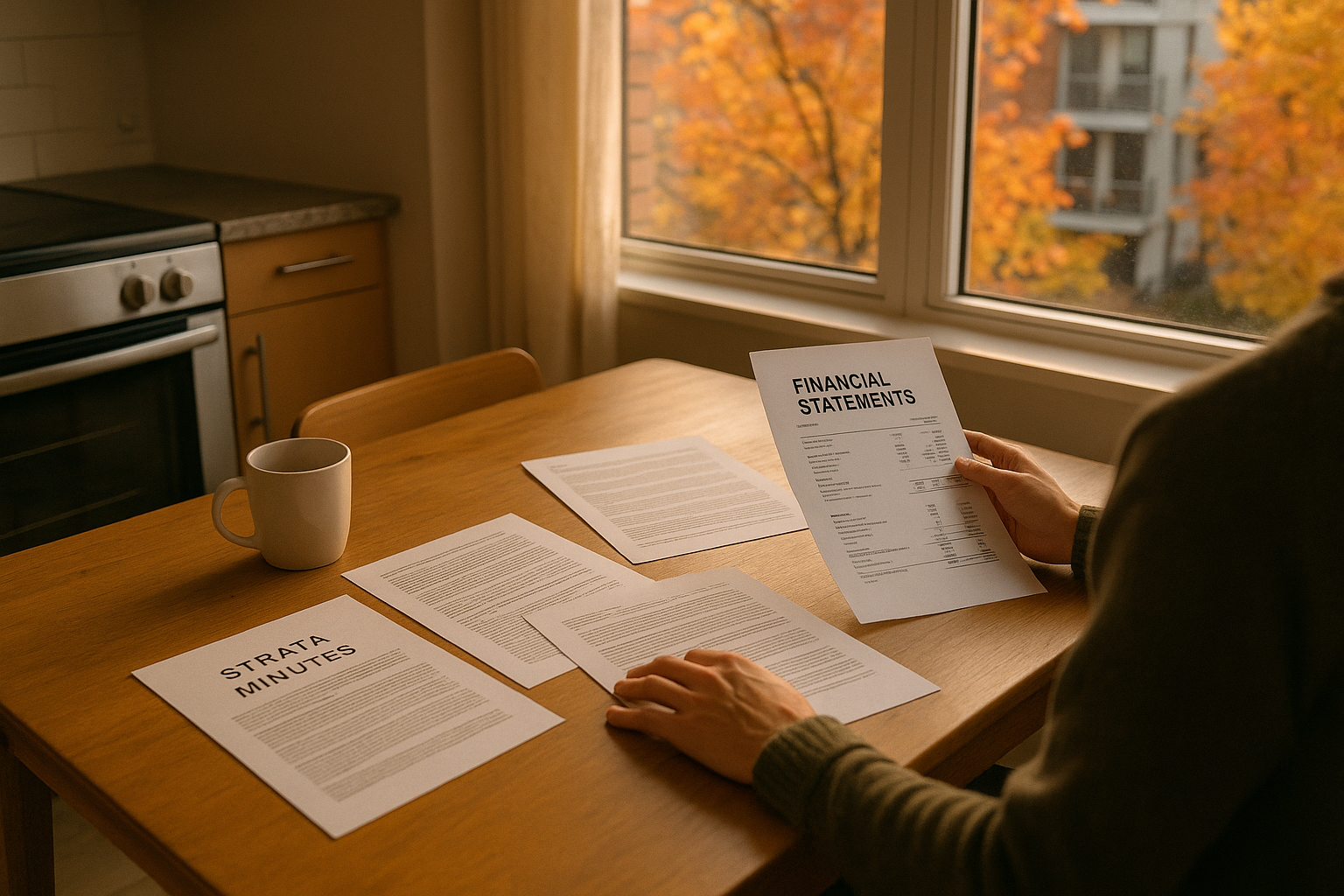
Each strata document tells part of the building’s story before you make an offer.
- Minutes (AGM, SGM, council): Show building projects, conflicts, recurring issues, and owner sentiment over time.
- Financials and Form B: Reveal the operating budget, contingency reserve fund (CRF) balance, and major expenses. The Form B includes crucial details like which parking stalls and storage lockers go with the strata lot, and any bylaw amendments not yet filed at the land title office.
- Depreciation report: Outlines long-term repair/replacement needs and expected costs. Most strata corporations in BC must obtain these on a schedule set by regulation—verify the current requirement and review the latest report available.
- Bylaws and rules: Disclose restrictions on rentals, pets, renovations, age, and more. These can affect your plans as an owner.
- Insurance certificates: Flag potential gaps, high deductibles, or recent claims.
Review all available documents for the last two years, minimum. For details on specific report types, see How to Vet Strata Financials, Depreciation Reports, and Special Levies Before Writing a BC Offer.
Red Flags to Watch For Before You Offer
Certain document details should make buyers pause—or at least dig deeper—before putting in an offer.
Common red flags include:
- Low or declining CRF balances compared to the building's repair needs
- Major upcoming repairs (roof, elevators, etc.) with no funding plan
- Frequent special levies or deferred maintenance
- Litigation or insurance claims that could affect fees or resale value
- Restrictive bylaws around pets, rentals, age, or renovations
- Council infighting or poor communication in minutes
If you spot these, clarify with your Realtor or a strata-savvy lawyer before proceeding. See How to Identify Strata Litigation and Insurance Red Flags Before You Offer in BC for guidance.
How to Structure Your Offer and Subjects After Review
Your document review should shape your offer strategy and subject clauses in BC.
If you find issues that need clarification, your offer can include a subject to satisfactory review of strata documents—giving you an out if something concerning comes to light. You may also need subjects for financing, inspection, or insurance approval. In competitive markets like Surrey or Richmond, ask your Realtor which risks are non-negotiable.
Be aware of the Home Buyer Rescission Period (“cooling-off period”) available for many BC residential purchases. This gives you a short, statutory window after offer acceptance to back out, but use it wisely—don’t rely on it as your main due diligence stage. For more, read Home Buyer Rescission Period in BC: How to Use Your Cooling-Off Window Wisely.
Tips for Efficient (and Defensible) Strata Document Review
Efficient document review is possible—even under offer pressure—if you use the right approach and tools.
- Start early: Request the full strata package as soon as you’re serious about a property.
- Organize by theme: Track issues in categories (financial, building envelope, bylaws, insurance, etc.) as you read.
- Ask for missing records: If documents are outdated or missing, get your Realtor to push the listing agent.
- Don’t skip the fine print: Restrictions and red flags often hide in footnotes or older minutes.
- Use technology: Tools like SearchStrata can analyze packages for key risks and summarize multi-year records much faster than manual review—helpful when time is tight.
If you need local context (like what’s typical in Victoria or Coquitlam), check city-specific resources.
Frequently Asked Questions
What strata records should I review before making an offer in BC?
You should review strata minutes (council, AGM, SGM), financial statements, the Form B, depreciation report, bylaws and rules, and the insurance certificate before making an offer. Always check you have the most recent versions and at least two years’ worth of minutes and financials.
How do I interpret the contingency reserve fund balance in BC strata documents?
Compare the CRF balance to upcoming expenses outlined in the depreciation report and recent minutes. A low or stagnant fund may signal major levies or deferred repairs ahead. Consult your Realtor or a strata specialist for specific analysis.
Is the Home Buyer Rescission Period enough time for strata due diligence?
The Home Buyer Rescission Period is a short, legally defined window that allows you to back out after an accepted offer, but it may not be enough for deep document review. Pre-offer diligence is strongly recommended.
What are the most common red flags in BC strata documents?
Frequent special levies, low CRF balances, upcoming major repairs, litigation, high insurance deductibles, and restrictive bylaws are common red flags that should be clarified before you offer.
Can technology help with reviewing BC strata documents?
Yes, platforms like SearchStrata can analyze and summarize large strata packages, highlight key risks, and speed up the document review process for buyers and agents.
Conclusion
Vetting strata documents before you write an offer is one of the most important steps in buying a BC condo or townhouse. It’s your chance to spot the true story—both good and bad—behind the building’s walls, and to avoid surprises that could cost you dearly. Always push for the full package, review it with care (and professional help if needed), and don’t be afraid to walk away if you see too many risks. If you want to make document review faster and more comprehensive, try SearchStrata free to analyze your next strata package with confidence.