Quick Answer
BC strata fees pay for your building’s shared expenses—including insurance, regular maintenance, utilities, and contributions to the contingency reserve fund. Fee increases are usually tied to rising service costs, insurance premiums, or the need to fund future repairs. Owners can follow budget documents and AGM packages to see how fees are allocated and to have a say in future increases.
What do strata fees actually cover in BC buildings?
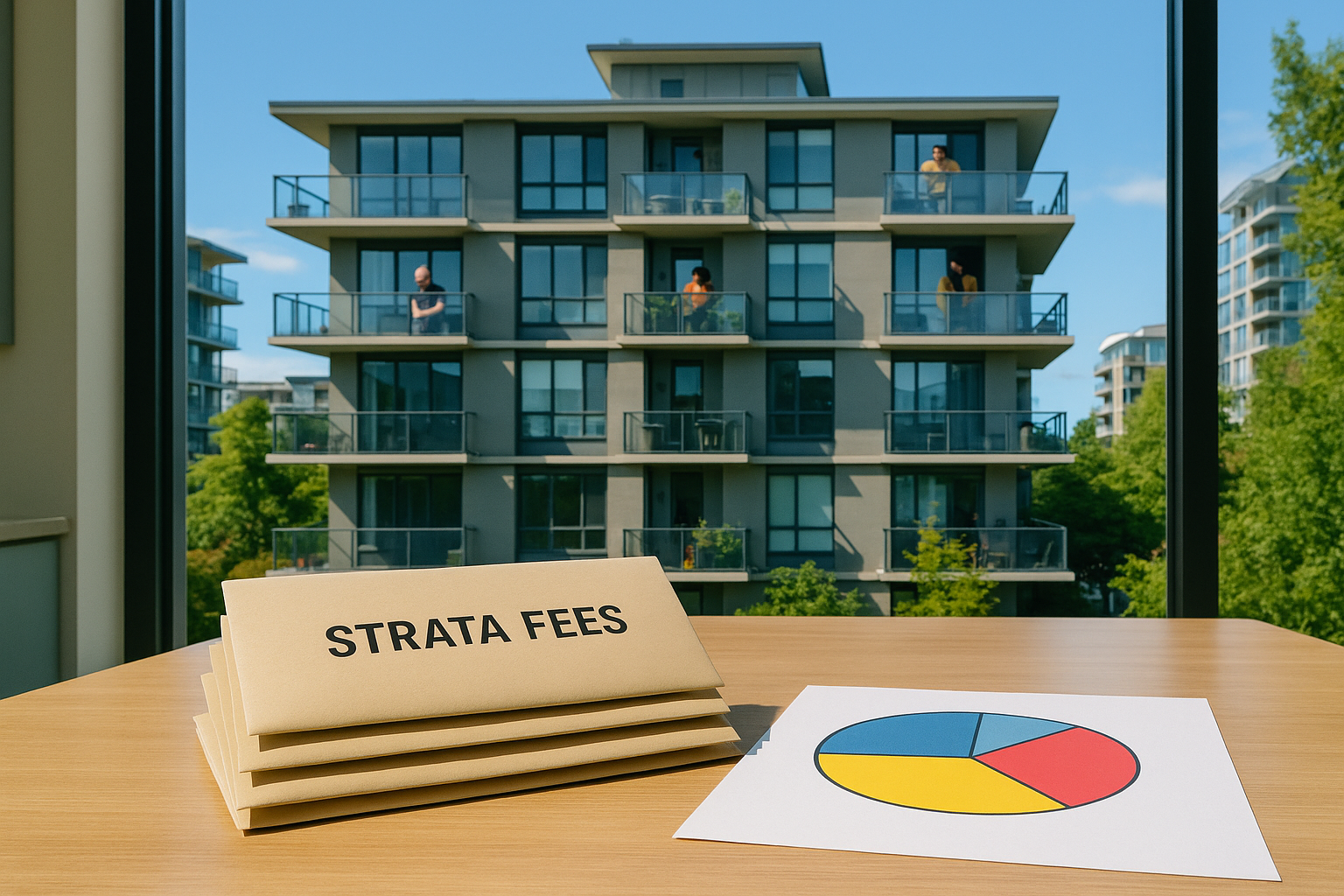
Strata fees in BC cover shared operating expenses such as insurance, utilities, routine cleaning, and repairs in common areas. Your monthly payment goes toward:
- Building insurance
- Landscaping and cleaning
- Repairs and general maintenance
- Shared utilities (hallway lights, hot water, etc.)
- Management fees (for professional strata management, if applicable)
- Contributions to the Contingency Reserve Fund (CRF) for future major repairs
The exact breakdown varies between buildings in cities like Vancouver or Surrey, but these are the typical categories. For details on your building, check the annual budget and last AGM package.
Why do strata fees keep rising every year?
Strata fees rise in BC mainly because the costs of insurance, utilities, and contracted services increase over time. Inflation, higher insurance deductibles, updated regulations, and aging infrastructure all put pressure on budgets—forcing most strata corporations to raise fees.
Other drivers include:
- Unexpected repairs or catch-up maintenance
- Increases to CRF contributions if the fund is low
- New regulatory or safety requirements
If you’re seeing steep increases, review your building’s AGM minutes to see if upcoming major repairs or insurance renewals are behind it. For more context, see How to Read Your Strata’s Financial Statements Like an Informed Owner.
How does your strata decide the amount?
Strata councils prepare a proposed annual budget by estimating all building expenses and dividing the total among all units using unit entitlement, but it only takes effect once the owners approve it by a majority vote at the annual general meeting. Owners approve this budget (and resulting fees) each year at the AGM.
Unit entitlement is usually based on each unit’s habitable area, though it can instead be the same whole number for every unit or a figure approved by the superintendent — so a two-bedroom doesn’t always pay more than a studio, and market value never comes into it. If you disagree with your strata's proposed budget, make your voice heard by attending the AGM or submitting feedback before the meeting.
What surprises can cause higher fees or sudden increases?
Major insurance hikes, emergency repairs, or underestimating previous budgets can prompt sudden strata fee jumps in BC buildings. Other surprises include:
- Unplanned equipment failures (elevator, boiler)
- Drastic utility increases
- CRF contributions rising after a new depreciation report
- Legal or regulatory costs
Fee surges are sometimes unavoidable. To anticipate them, look closely at your strata's depreciation report and council meeting minutes for early warning signs. Catching these in advance can help the council plan better—and may avoid the need for a special levy.
Can owners influence or control strata fee increases?
Owners can help manage strata fees by getting involved in the budget process and keeping an eye on building maintenance needs. Attend the AGM, ask questions about new contracts or repairs, and encourage the council to seek competitive quotes for large expenses.
If you have budget concerns, consider serving on council or the finance committee. Reviewing key documents—like the annual budget, CRF status, and strata council meeting minutes—can help you advocate for responsible, realistic planning.
Frequently Asked Questions
What happens if an owner doesn’t pay their strata fees?
If an owner falls behind on strata fees, the strata corporation can charge interest, restrict access to certain amenities, and eventually place a lien against the unit. Persistent non-payment can lead to legal action, so it’s important to communicate early if you’re struggling to pay.
Are special levies the same as regular strata fees?
No, special levies are separate, one-time payments for major repairs or upgrades that the regular budget and contingency fund can’t cover. Regular strata fees are ongoing monthly payments for shared expenses and planned savings.
Can strata fees go down if building costs decrease?
Yes, but it’s uncommon. If operating costs drop or the contingency fund is well above targets, strata councils may propose lower fees, but this is rare due to ongoing inflation and aging infrastructure.
Are utilities always included in BC strata fees?
Not always. Some utilities (like water or gas) may be included, but many BC stratas bill hydro/electricity separately. Check your building’s budget and bylaws to see what’s covered by your monthly fees.
How can I see exactly how my strata fees are being spent?
Owners can review the strata’s annual budget, financial statements, and AGM materials for a detailed breakdown. These records must be provided to owners—ask your strata manager or council if you haven’t received them.
Conclusion
Understanding where your strata fees go—and why they rise—empowers you to make informed decisions and advocate for your building’s financial health. Strata fee increases are often driven by rising costs, but careful review and owner involvement can help maintain fairness and transparency. For a clearer picture of your building’s finances, analyze meeting minutes and budget documents regularly, or try SearchStrata to make sense of complex strata packages in minutes.