Quick Answer
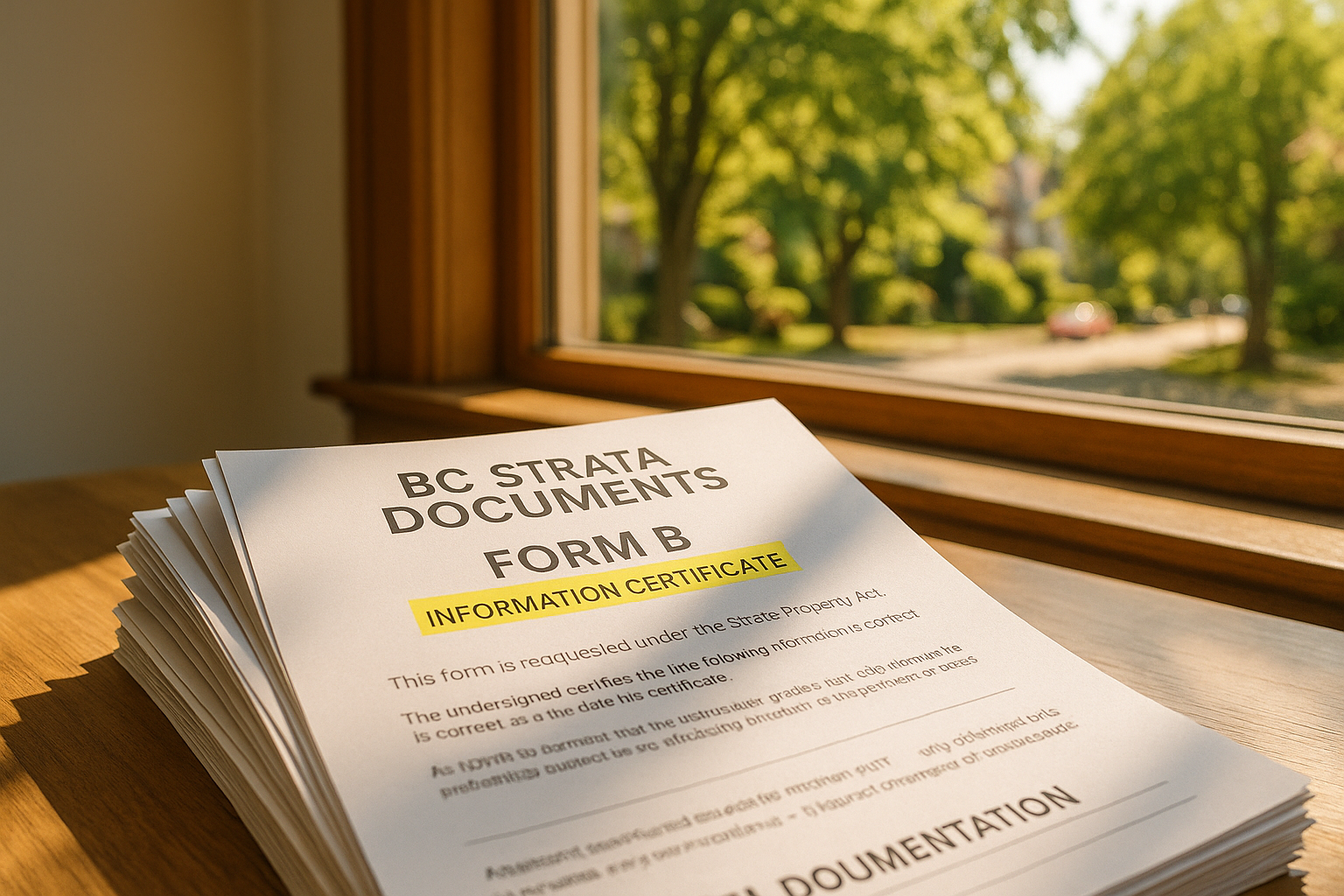
In BC’s early summer market, buyers and Realtors must carefully review the Strata Form B before subject removal to confirm key financial, legal, and building details. The Form B discloses vital information such as strata fees, bylaw summaries, outstanding levies, insurance, and parking/storage arrangements. Missing or unclear details on a Form B can expose buyers to unexpected risks, so a thorough check—ideally paired with other strata documents—is essential for an informed purchase.
What is a Strata Form B, and Why Does it Matter?
A Strata Form B is a legally required disclosure document that summarizes core financial and legal information about a strata lot and its corporation. In BC, sellers must provide a current Form B to prospective buyers, often as part of subject conditions. The Form B reveals essentials like monthly strata fees, any amounts owing, insurance coverage, parking and storage assignments, and pending special levies.
Because the Form B is the only document in BC that confirms the current status of a specific strata unit, buyers rely on its details to avoid surprises post-completion. Skipping a careful review can lead to issues such as unbudgeted fees or disputes over parking rights. Cities like Vancouver and Surrey handle thousands of Form B packages every month during the summer rush, making accuracy and completeness even more critical in competitive conditions.
Which Sections of the Form B Deserve Special Attention This Season?
The most important sections of the Form B in early summer are:
- Strata fees and arrears: Confirm the current monthly fee and check if any amounts are owed by the seller.
- Special levies: Watch for any pending or recently approved levies that will impact financial planning.
- Parking/storage: Only the Form B confirms which stalls/lockers are assigned, and whether rights are "limited common property" or by "license".
- Insurance summary: Check for policy expiry dates and deductibles.
- Bylaw summaries and usage restrictions: These can affect pets, rentals, and renovations.
Peak buying season increases the chances of rushed documents or errors, so double-check for omitted details or handwritten changes. In buildings across Richmond and Coquitlam, busy managers may overlook updating recent levy votes or insurance renewals.
How Should Buyers and Agents Cross-Reference the Form B With Other Strata Documents?
Buyers and agents should always review the Form B alongside minutes, financials, and the depreciation report for full context. The Form B provides a snapshot, but detailed records reveal ongoing projects, bylaw changes, or complaints not summarized on Form B.
For example, a Form B issued in early June may list no new special levies, but AGM minutes from mid-May could reveal an upcoming vote. Similarly, insurance details on Form B should match the certificate provided as an attachment. Platforms like SearchStrata help streamline this process by using AI to spot discrepancies and missing information across multiple documents.
What Are Common Red Flags or Omissions on Form B in the Early Summer Market?
Common red flags on Form B documents during busy market months include outdated signatures, missing insurance certificates, or unclear parking assignments. In high-turnover periods, errors such as:
- Outdated arrears amounts (especially if a seller has just paid a levy)
- Missing attachments (AGM minutes, depreciation summary, insurance)
- Handwritten amendments without initialling
are more likely. Buyers in areas like Victoria or Burnaby should pay particular attention to fast-changing financial details and verify all unit-specific details before subject removal. When in doubt, request a fresh Form B or clarification from the strata manager.
When Should You Order a Fresh Form B, and Who Is Responsible for Accuracy?
A Form B is only guaranteed accurate as of its date of issuance, so buyers should request a new one if more than a few weeks have passed or if major events (such as a special levy or AGM) have occurred. Strata corporations are legally responsible for preparing Form B, but sellers and their agents must ensure it is up-to-date and complete for buyers.
In early summer, rapid turnover in buildings means relying on an older Form B can risk missing new fees or bylaw changes. If documents appear out of date—or if you notice mismatches when cross-referencing minutes or financials—ask for an updated Form B before removing subjects.
Frequently Asked Questions
What is a Strata Form B in BC?
A Strata Form B is a mandatory disclosure document that provides key information about a strata lot and its corporation, such as fees, bylaws, insurance, arrears, and parking or storage assignments.
Can I remove subjects with an old Form B?
It is risky to remove subjects based on an outdated Form B, as new levies or changes could arise. Always ensure your Form B is current—usually less than 30 days old—before making final decisions.
Does the Form B show if there are any special levies coming up?
The Form B lists outstanding and upcoming special levies that are known at the time of its issuance. It is important to also check minutes for recent or pending levy discussions.
Is the Form B all I need to review for a BC condo purchase?
While the Form B is essential, it should always be read alongside strata minutes, financials, and the depreciation report to fully understand risks and obligations.
Who is responsible for Form B accuracy in BC?
The strata corporation must accurately prepare the Form B, but sellers and their real estate agents are responsible for ensuring buyers receive a current and complete version.
Conclusion
In BC’s fast-moving early summer market, a careful review of the Strata Form B is essential before subject removal. Overlooking small details or relying on an outdated document can have costly consequences, especially when competition is high. Cross-reference the Form B with minutes, financials, and insurance certificates, and don’t hesitate to request updates or clarification if anything is unclear. To make this process easier and more reliable, consider using a platform like SearchStrata to analyze your strata package for hidden risks and missing details.